
Ultrasound-Guided Biopsies
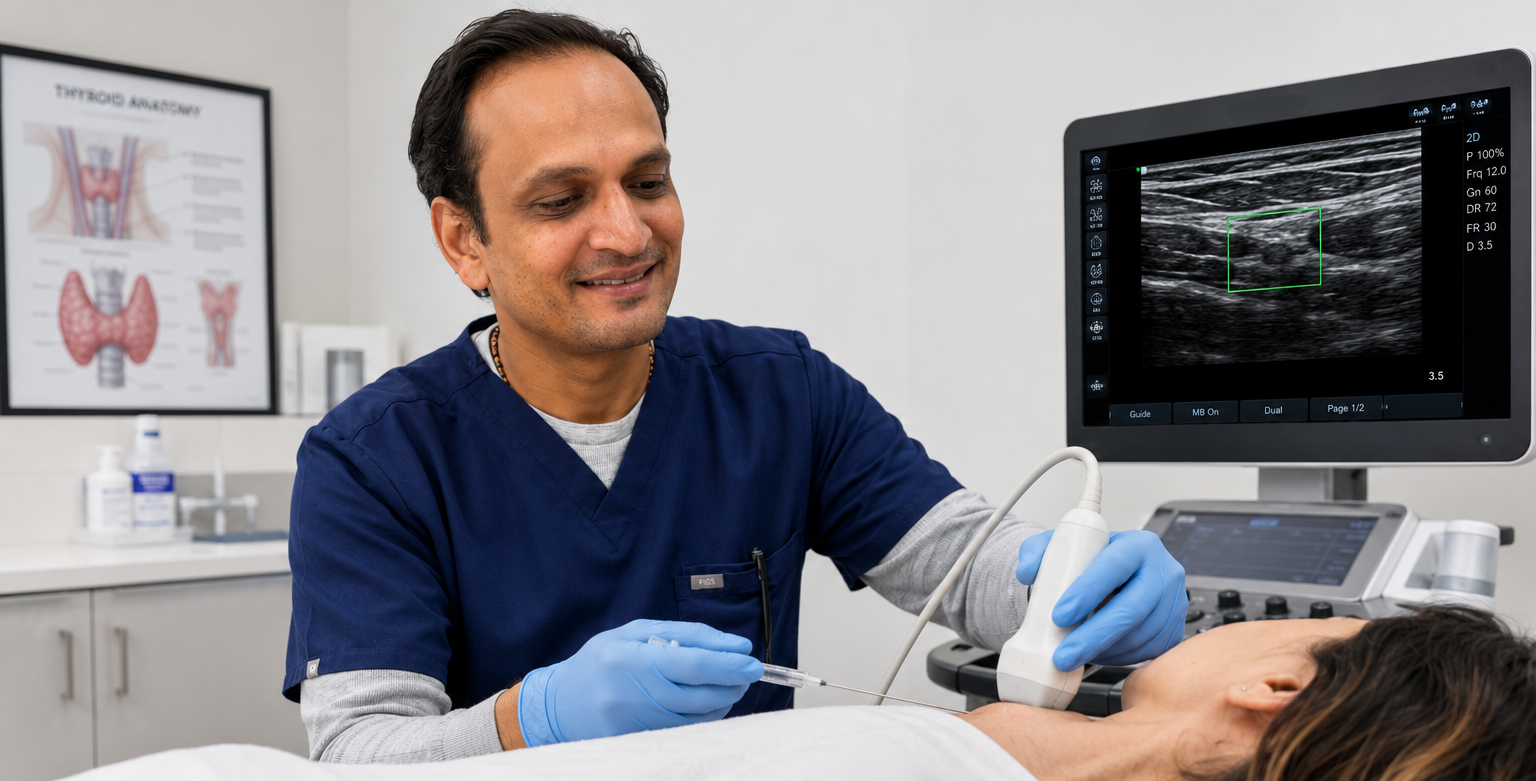
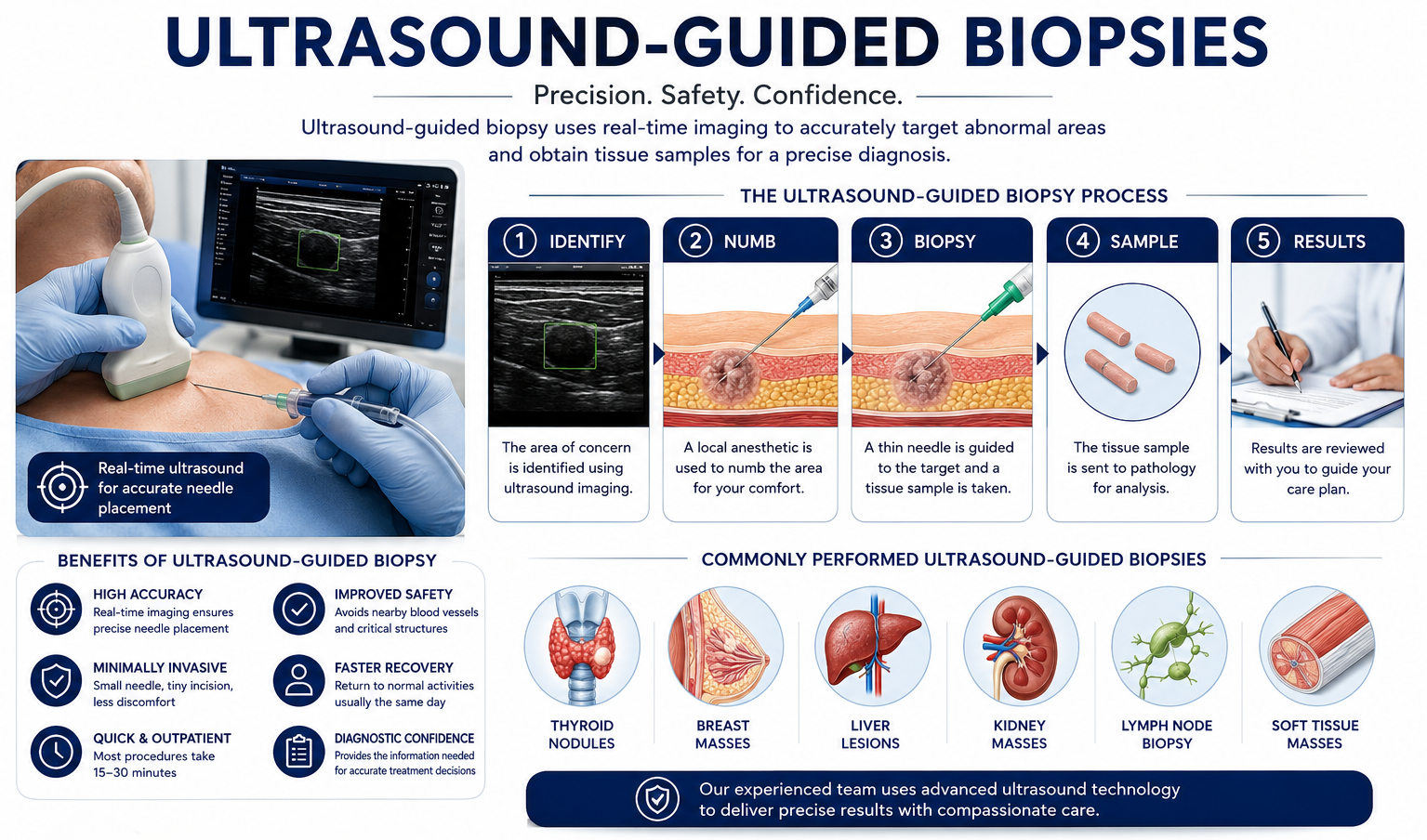
An Ultrasound-Guided Biopsy is a minimally invasive procedure used to obtain a tissue sample from a suspicious mass, lump, nodule, lymph node, or abnormal area within the body. Using real-time ultrasound imaging, a specialist can accurately guide a biopsy needle into the targeted area to collect tissue for laboratory analysis.
Ultrasound guidance helps improve precision, minimize damage to surrounding tissues, and increase the likelihood of obtaining an accurate diagnosis. These biopsies are commonly performed in areas such as the thyroid, breast, lymph nodes, liver, soft tissues, neck, abdomen, and other accessible structures.
Why Ultrasound-Guided Biopsies Are Performed
Your healthcare provider may recommend an ultrasound-guided biopsy if you have:
- A suspicious mass or lesion
- An abnormal imaging finding
- Enlarged lymph nodes
- A thyroid nodule
- A breast lump
- A liver lesion
- A soft tissue mass
- Persistent swelling of unknown cause
- Suspected infection or inflammatory condition
- Need for tissue diagnosis before treatment planning
The procedure helps determine whether a lesion is benign, malignant, infectious, inflammatory, or requires further evaluation.
How the Procedure Works
Before the Procedure
Preparation may include:
- Review of your medical history and medications
- Discussion of allergies and bleeding disorders
- Blood tests if necessary
- Temporary adjustment of blood-thinning medications if instructed
- Review of previous imaging studies
- Placement of an intravenous (IV) line if sedation is required
Most ultrasound-guided biopsies are performed on an outpatient basis.
During the Procedure
- The patient is positioned comfortably depending on the biopsy location.
- The skin over the treatment area is cleaned and sterilized.
- Ultrasound gel is applied to the skin.
- A handheld ultrasound probe identifies the target lesion in real time.
- Local anesthesia is administered to numb the area.
- A specialized biopsy needle is guided into the lesion using continuous ultrasound imaging.
- One or more tissue samples are collected.
- The samples are placed in laboratory containers for analysis.
- The needle is removed.
- Pressure and a small bandage are applied to the biopsy site.
The procedure typically takes 20 to 60 minutes, depending on the location and complexity of the biopsy.
Types of Ultrasound-Guided Biopsies
Several biopsy techniques may be used, including:
- Fine Needle Aspiration (FNA) – collects cells or fluid using a very thin needle
- Core Needle Biopsy – obtains small cylinders of tissue for detailed examination
- Soft Tissue Biopsy – samples tissue from masses beneath the skin
- Lymph Node Biopsy – evaluates enlarged or suspicious lymph nodes
- Organ Biopsy – samples tissue from organs such as the liver or other accessible structures
The type of biopsy depends on the location and characteristics of the abnormality being evaluated.
What to Expect During the Procedure
- You will usually remain awake throughout the procedure.
- Local anesthesia helps minimize discomfort.
- You may feel mild pressure during needle placement.
- Ultrasound guidance allows continuous visualization of the target area.
- Most patients experience minimal pain.
- Medical staff monitor you throughout the procedure.
Most biopsies are completed quickly with little interruption to normal activities.
Benefits of Ultrasound-Guided Biopsies
- Minimally invasive procedure
- Real-time imaging guidance
- High level of accuracy
- No surgical incision in most cases
- Reduced risk of injury to surrounding structures
- Quick outpatient procedure
- Minimal scarring
- Short recovery time
- Provides important diagnostic information
- Helps guide treatment decisions
After the Procedure
Following the biopsy:
- You may be monitored briefly before discharge.
- Mild soreness, bruising, or tenderness at the biopsy site may occur.
- Most patients return home the same day.
- Strenuous activity may be limited for 24 to 48 hours depending on the biopsy location.
- The biopsy site should be kept clean and dry as instructed.
- Follow-up appointments may be scheduled to review results.
Your healthcare provider will provide specific post-procedure instructions based on the biopsy location.
Risks and Safety
Ultrasound-guided biopsies are generally very safe, but potential risks include:
- Minor bleeding
- Bruising
- Temporary soreness
- Infection
- Swelling at the biopsy site
- Injury to nearby structures (rare)
- Insufficient tissue sample requiring repeat biopsy
- Allergic reaction to medications or anesthetics (rare)
Serious complications are uncommon when performed by experienced specialists.
Understanding Your Results
The tissue samples are sent to a pathology laboratory for detailed examination. Results may indicate:
- Benign (noncancerous) findings
- Malignant (cancerous) cells
- Precancerous changes
- Infection
- Inflammatory conditions
- Need for additional testing
- Need for treatment planning or specialist referral
Results are typically available within several days to one week, depending on the type of testing required.
Frequently Asked Questions
Is an ultrasound-guided biopsy painful?
Most patients experience only mild discomfort. Local anesthesia is used to numb the area and improve comfort during the procedure.
How long does the procedure take?
Most ultrasound-guided biopsies take approximately 20 to 60 minutes, depending on the location and complexity of the biopsy.
Will I be awake during the procedure?
Yes. Most patients remain awake, although sedation may occasionally be used for certain biopsies.
When will I receive my results?
Results are commonly available within a few days to one week, although specialized testing may take longer.
Why is ultrasound guidance used?
Ultrasound provides real-time imaging, allowing the physician to precisely target the area of concern while avoiding nearby structures.
Schedule a Consultation
If you have a suspicious mass, abnormal imaging finding, enlarged lymph node, thyroid nodule, or another condition requiring tissue diagnosis, an ultrasound-guided biopsy can provide accurate and reliable information with a minimally invasive approach. Contact our team today to schedule a consultation and learn more about this advanced image-guided diagnostic procedure.