
Atherectomy
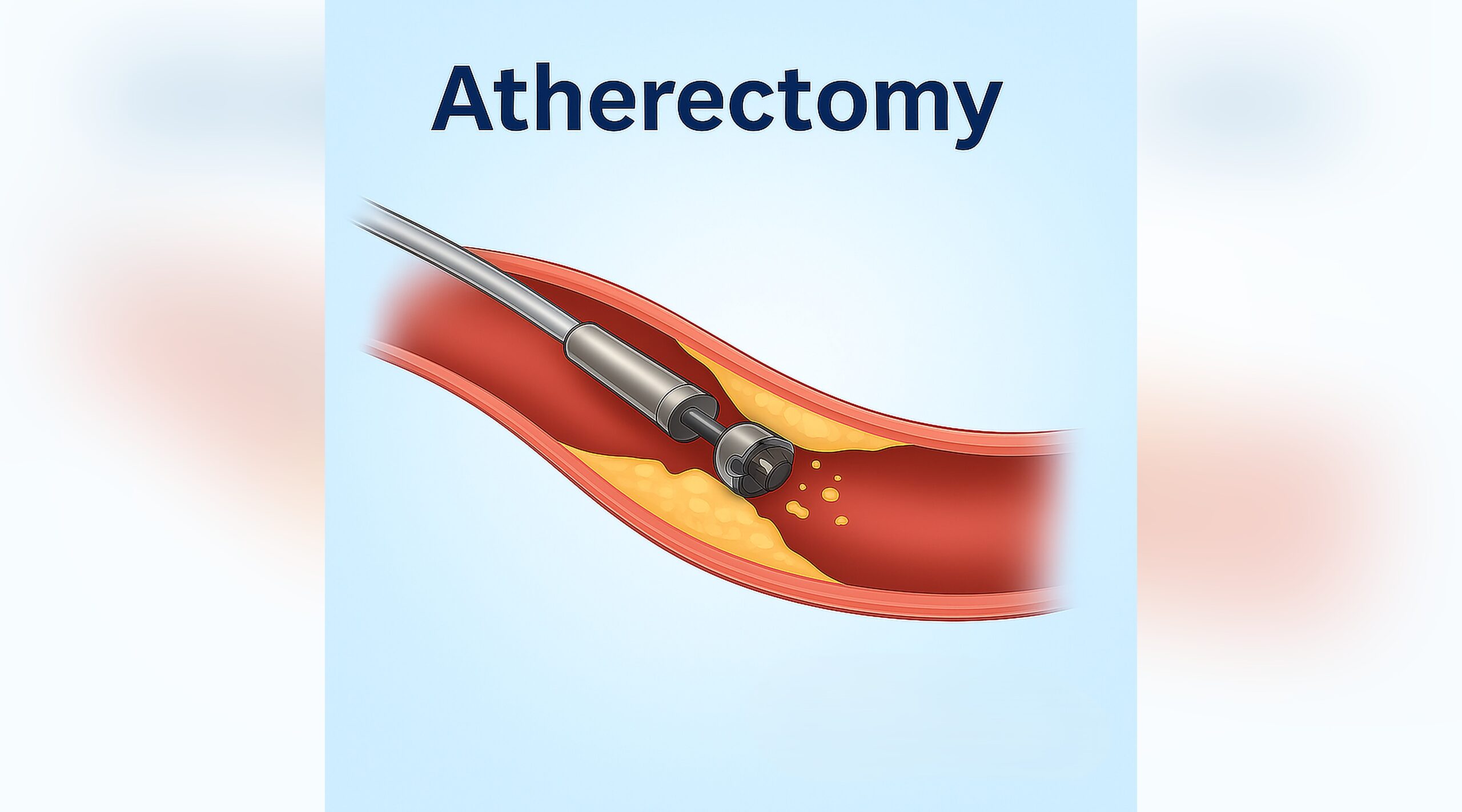
Atherectomy is a minimally invasive procedure used to remove plaque buildup from arteries and restore healthy blood flow to the legs. It is commonly performed to treat Peripheral Artery Disease (PAD), a condition in which fatty deposits narrow or block the arteries, reducing circulation to the lower extremities.
Unlike angioplasty, which pushes plaque against the artery wall, atherectomy physically removes or reduces the plaque from within the blood vessel. The procedure may be performed alone or in combination with angioplasty and stent placement, depending on the severity and location of the blockage.
Why Atherectomy Is Performed
Your healthcare provider may recommend atherectomy if you have:
- Peripheral Artery Disease (PAD)
- Significant plaque buildup in the leg arteries
- Leg pain while walking (claudication)
- Leg pain at rest caused by poor circulation
- Non-healing wounds or ulcers on the feet or legs
- Arteries that are heavily calcified (hardened by calcium deposits)
- Blockages that may not respond well to balloon angioplasty alone
- Reduced blood flow threatening tissue health or limb function
The procedure helps improve circulation, relieve symptoms, and support wound healing.
How the Procedure Works
Before the Procedure
Preparation may include:
- Review of your medical history and medications
- Blood tests and vascular imaging studies
- Temporary adjustment of blood-thinning medications if instructed
- Fasting for several hours before the procedure
- Placement of an intravenous (IV) line for medications and fluids
The procedure is typically performed in a hospital or outpatient vascular center.
During the Procedure
- The patient lies comfortably on an examination table.
- The skin is cleaned and sterilized.
- Local anesthesia is administered at the catheter insertion site, usually in the groin.
- A small catheter is inserted into an artery.
- Using real-time X-ray guidance, the catheter is advanced to the blocked artery.
- A specialized atherectomy device is positioned at the plaque buildup.
- The device removes, shaves, sands, vaporizes, or cuts away plaque depending on the technology used.
- Plaque particles may be collected within the device or safely carried away through the bloodstream.
- Additional treatments such as balloon angioplasty or stent placement may be performed if necessary.
- The catheter is removed, and the access site is closed.
The procedure typically takes between 1 and 2 hours, depending on the complexity of the blockage.
Types of Atherectomy
Several atherectomy technologies may be used, including:
- Directional Atherectomy – cuts and removes plaque from the artery wall
- Rotational Atherectomy – uses a rotating device to break down plaque
- Orbital Atherectomy – sands away calcified plaque while preserving healthy tissue
- Laser Atherectomy – uses laser energy to vaporize plaque and blockage material
Your physician will determine the most appropriate technique based on your condition.
What to Expect During the Procedure
- You will remain awake but may receive medication to help you relax.
- Mild pressure may be felt at the catheter insertion site.
- Most patients experience little or no pain during treatment.
- Vital signs are continuously monitored.
- The procedure is designed to improve blood flow without the need for open surgery.
Benefits of Atherectomy
- Removes plaque directly from the artery
- Restores blood flow to the legs and feet
- Improves symptoms of Peripheral Artery Disease
- Effective for heavily calcified arteries
- Minimally invasive approach
- Small incision and minimal scarring
- Short recovery time
- May reduce the need for open vascular surgery
- Can be combined with angioplasty or stenting when needed
After the Procedure
Following atherectomy:
- You will be monitored in a recovery area for several hours.
- Mild bruising or soreness at the catheter site may occur.
- Most patients can walk within a short period after treatment.
- Many patients return home the same day.
- Activity restrictions may be recommended for several days.
- Medications may be prescribed to help maintain blood flow and reduce clot risk.
Your physician will provide detailed recovery instructions and follow-up recommendations.
Risks and Safety
Atherectomy is generally safe, but potential risks include:
- Bleeding at the catheter insertion site
- Bruising or swelling
- Infection
- Blood clot formation
- Injury to the artery wall
- Artery narrowing or re-blockage over time
- Embolization (small plaque particles traveling downstream)
- Allergic reaction to contrast dye
- Kidney complications related to contrast material
- Rare heart attack, stroke, or severe vascular complications
Your healthcare team uses specialized techniques and monitoring to minimize these risks.
Understanding Your Results
Successful atherectomy may result in:
- Improved blood flow to the lower extremities
- Reduced leg pain and cramping
- Improved walking distance and mobility
- Better healing of wounds and ulcers
- Increased circulation to the feet and toes
- Reduced risk of limb-threatening complications
Follow-up appointments and imaging studies may be recommended to monitor the treated artery and overall vascular health.
Frequently Asked Questions
Is atherectomy painful?
Most patients experience minimal discomfort. Local anesthesia and sedation help keep the procedure comfortable.
How is atherectomy different from angioplasty?
Angioplasty uses a balloon to widen the artery by compressing plaque, while atherectomy physically removes or reduces plaque from inside the vessel.
Will I need a stent after atherectomy?
Not always. Some patients achieve excellent results with atherectomy alone, while others may benefit from additional angioplasty or stent placement.
How long does recovery take?
Most patients return to normal activities within a few days, although strenuous activities may be restricted temporarily.
Can plaque return after treatment?
Yes. Plaque can redevelop over time. Healthy lifestyle habits, medications, and regular follow-up care help reduce this risk.
Schedule a Consultation
If you have Peripheral Artery Disease, leg pain, poor circulation, or non-healing wounds, atherectomy may help restore blood flow and improve your quality of life. Contact our team today to schedule a consultation and learn whether this minimally invasive treatment option is right for you.