
Peripheral Angiogram
A Peripheral Angiogram is a minimally invasive imaging procedure used to examine the arteries that supply blood to the legs and lower extremities. Using contrast dye and real-time X-ray imaging (fluoroscopy), physicians can identify narrowed, blocked, or damaged blood vessels that may be affecting circulation.
This procedure plays an important role in diagnosing Peripheral Artery Disease (PAD) and other vascular conditions that can lead to pain, poor wound healing, or reduced blood flow to the legs.
Why a Peripheral Angiogram Is Performed
Your healthcare provider may recommend a Peripheral Angiogram if you have:
- Leg pain while walking (claudication)
- Leg pain at rest
- Numbness, weakness, or cramping in the legs
- Non-healing wounds or ulcers on the feet or legs
- Coldness or discoloration of the lower extremities
- Reduced or absent pulses in the legs
- Suspected Peripheral Artery Disease (PAD)
- Abnormal findings on ultrasound, CT angiography, or other vascular imaging studies
The procedure helps determine the location and severity of arterial blockages and guides treatment planning.
How the Procedure Works
Before the Procedure
Preparation may include:
- Reviewing your medical history and medications
- Blood tests to assess kidney function and clotting ability
- Temporary adjustment of blood-thinning medications if advised
- Fasting for several hours before the procedure
- Placement of an intravenous (IV) line for medications and fluids
The procedure is typically performed in a hospital or outpatient vascular center.
During the Procedure
- The patient lies comfortably on an X-ray table.
- The skin is cleaned and sterilized.
- Local anesthetic is administered to numb the access site, usually in the groin or arm.
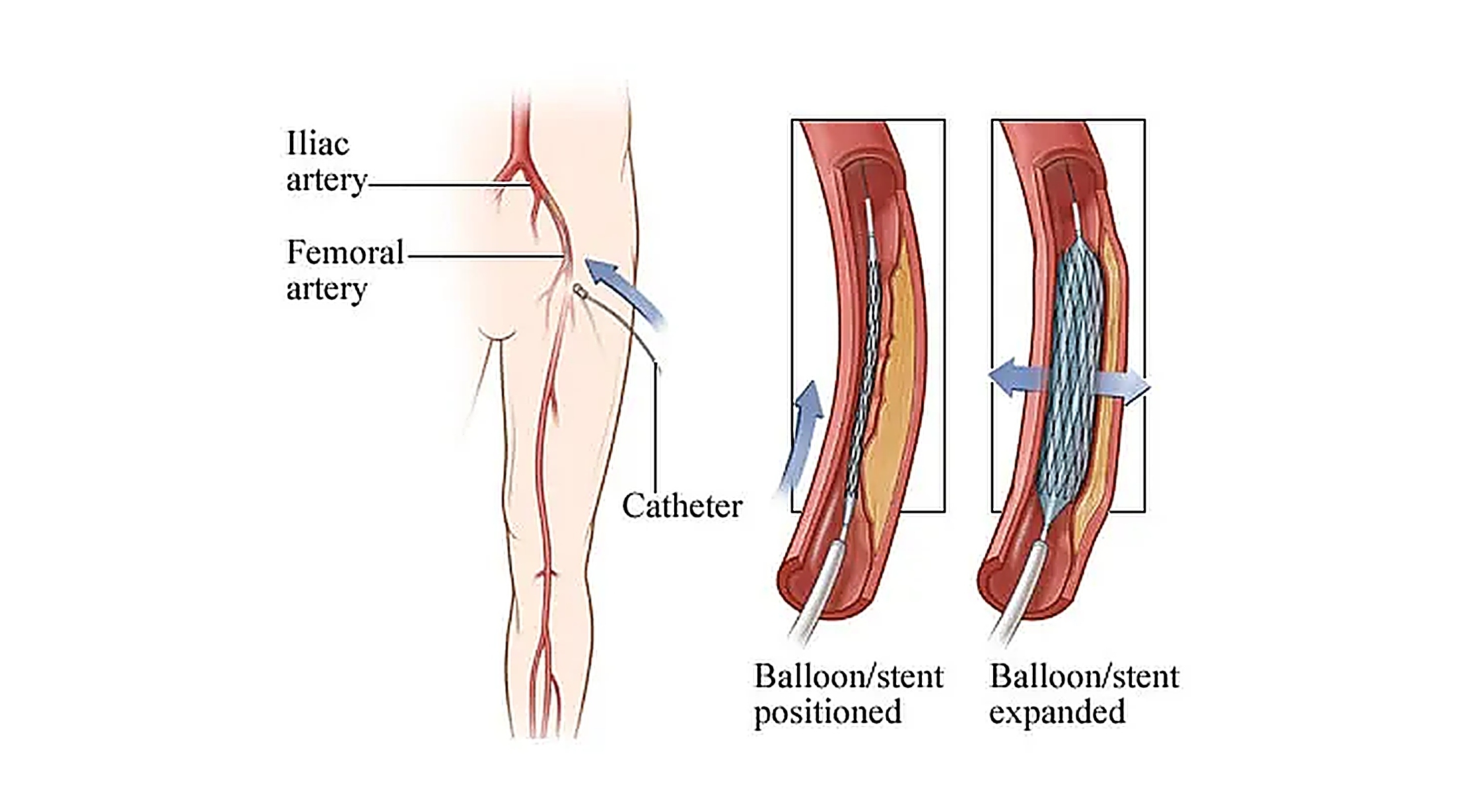
- A small catheter is inserted into an artery.
- Contrast dye is injected through the catheter.
- Real-time X-ray images are obtained as the dye travels through the arteries.
- The physician evaluates blood flow and identifies any narrowing or blockage.
- If necessary, treatment such as angioplasty or stent placement may be performed during the same session.
- The catheter is removed, and pressure is applied to prevent bleeding.
Most procedures take approximately 30–90 minutes depending on complexity.
What to Expect During the Procedure
- You will remain awake but may receive medication to help you relax.
- You may feel brief pressure during catheter insertion.
- A temporary warm sensation may occur when contrast dye is injected.
- Most patients experience little discomfort throughout the procedure.
- Medical staff continuously monitor your heart rate, blood pressure, and oxygen levels.
Benefits of a Peripheral Angiogram
- Provides detailed images of leg arteries
- Accurately identifies narrowed or blocked blood vessels
- Helps diagnose Peripheral Artery Disease
- Guides treatment decisions
- Minimally invasive alternative to surgical exploration
- Can combine diagnosis and treatment in one procedure
- Quick recovery with minimal downtime
After the Procedure
Following the angiogram:
- You will be monitored in a recovery area for several hours.
- Fluids may be encouraged to help flush contrast dye from your body.
- Mild soreness or bruising at the catheter insertion site is common.
- Most patients return home the same day unless additional treatment is performed.
- Activity restrictions may be recommended for 24–48 hours.
Your physician will provide specific post-procedure instructions.
Risks and Safety
A Peripheral Angiogram is generally safe, but potential risks include:
- Minor bleeding at the catheter site
- Bruising or swelling
- Allergic reaction to contrast dye
- Blood vessel injury
- Blood clot formation
- Infection
- Kidney complications related to contrast dye (rare)
- Very rare risk of stroke, heart attack, or severe vascular complications
Your healthcare team takes precautions to minimize these risks.
Understanding Your Results
The angiogram may reveal:
- Normal blood flow through the arteries
- Mild, moderate, or severe arterial narrowing
- Complete arterial blockage
- Areas of plaque buildup
- Aneurysms or abnormal vessel structures
- Need for angioplasty, stenting, or surgical intervention
Your physician will review the findings and discuss the most appropriate treatment plan.
Frequently Asked Questions
Is a Peripheral Angiogram painful?
Most patients experience minimal discomfort. Local anesthesia helps numb the access site, and sedation may be provided for comfort.
How long does the procedure take?
Most procedures take between 30 and 90 minutes, depending on the complexity of the evaluation.
Will I be awake during the procedure?
Yes. Most patients remain awake but relaxed with mild sedation if needed.
Can treatment be performed during the same procedure?
Yes. If a blockage is identified, angioplasty, stenting, or other vascular interventions may often be performed immediately.
When can I return to normal activities?
Many patients resume light activities within 24 hours, although strenuous activity may need to be avoided for several days.
Schedule a Consultation
If you are experiencing leg pain, poor circulation, non-healing wounds, or symptoms of Peripheral Artery Disease, a Peripheral Angiogram can provide valuable diagnostic information and help guide effective treatment. Contact our team today to schedule a consultation and learn more about your vascular health and treatment options.