
Fine Needle Aspiration (FNA)
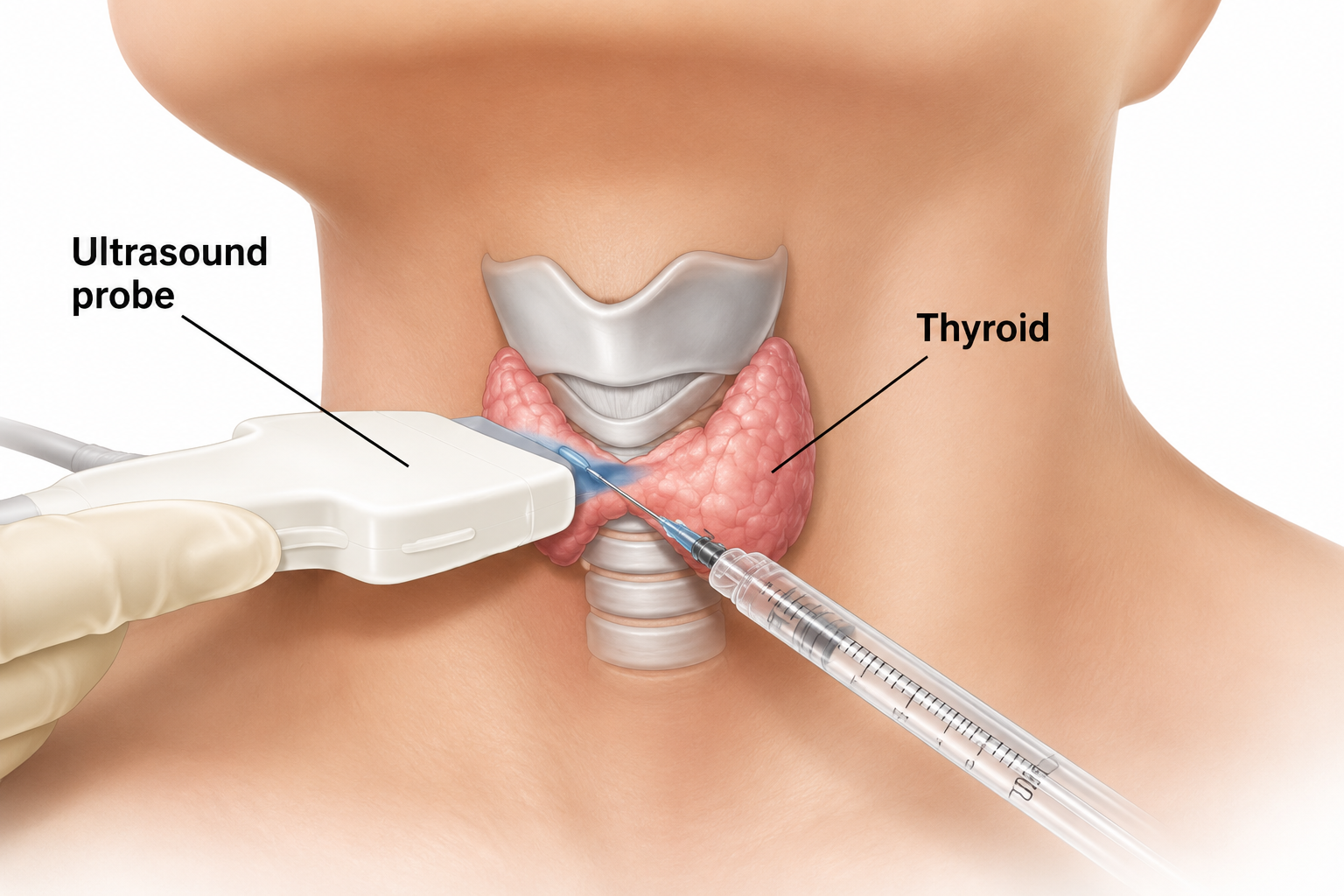
Fine Needle Aspiration (FNA) is a minimally invasive diagnostic procedure used to collect small samples of cells or fluid from a lump, mass, or suspicious area in the body. The sample is then examined under a microscope to help diagnose infections, cysts, benign growths, or cancerous conditions.
FNA is commonly performed on areas such as the thyroid, breast, lymph nodes, salivary glands, and soft tissue masses.
Why Fine Needle Aspiration Is Performed
Your healthcare provider may recommend an FNA procedure to:
- Evaluate a lump or swelling
- Diagnose cysts or tumors
- Investigate enlarged lymph nodes
- Assess thyroid nodules
- Detect infections or inflammatory conditions
- Help determine whether a mass is benign or malignant
Because the procedure is quick and minimally invasive, it is often preferred over surgical biopsy for initial evaluation.
How the Procedure Works
During the Procedure
- The skin over the area is cleaned thoroughly.
- A very thin, hollow needle is inserted into the targeted tissue.
- Cells or fluid are gently withdrawn into a syringe.
- Multiple samples may be collected for accurate analysis.
- The sample is sent to a laboratory for microscopic examination.
In some cases, ultrasound guidance is used to improve precision, especially for deep or small nodules.
What to Expect During the Procedure
Your healthcare provider may recommend an FNA procedure to:
- The procedure usually takes 10–30 minutes.
- Most patients experience minimal discomfort.
- Local anesthesia may or may not be required depending on the location.
- Patients can typically return to normal activities shortly afterward.
You may feel slight pressure or mild pinching during needle insertion.
Benefits of Fine Needle Aspiration
- Minimally invasive
- Quick outpatient procedure
- Minimal scarring
- Faster recovery compared to surgical biopsy
- Accurate diagnostic information
- Lower risk of complications
Risks and Possible Side Effects
Fine Needle Aspiration is generally very safe. Mild side effects may include:
- Minor bruising
- Temporary soreness
- Slight swelling at the biopsy site
Rare complications can include bleeding, infection, or insufficient sample collection requiring repeat testing.
Preparing for Your Appointment
Before your FNA procedure:
- Inform your provider about medications, allergies, or bleeding disorders.
- You may be advised to stop blood-thinning medications temporarily.
- Wear comfortable clothing for easy access to the biopsy area.
- Follow any fasting instructions if sedation is planned.
Understanding Your Results
Laboratory results are typically available within a few days. Your physician will review the findings and discuss whether:
- The sample is benign (non-cancerous)
- Additional testing is needed
- Further treatment or follow-up is recommended
Frequently Asked Questions
Is Fine Needle Aspiration painful?
Most patients report only mild discomfort similar to a blood draw or injection.
How long does recovery take?
Recovery is usually immediate, and most people resume normal activities the same day.
Is FNA the same as a biopsy?
Yes, FNA is a type of biopsy that uses a thin needle to obtain cells for examination.
Will I need stitches afterward?
No stitches are required because the needle used is extremely small.
Schedule a Consultation
If you have a lump, swelling, or abnormal imaging result, Fine Needle Aspiration can provide fast and reliable diagnostic information. Contact our team today to schedule a consultation and learn more about your treatment options.