
Port Access/Interventions
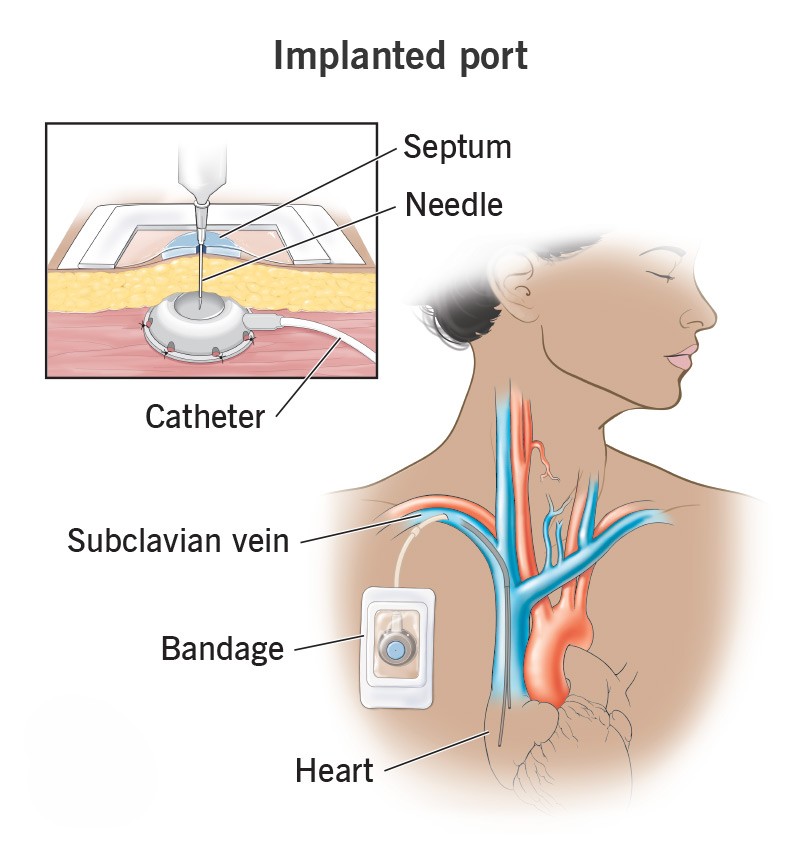
Port Access and Port Interventions are minimally invasive procedures used to evaluate, maintain, repair, restore, or manage implanted venous access ports. These ports, often called port-a-caths, are small medical devices placed beneath the skin and connected to a catheter that leads into a large central vein. They provide reliable long-term access to the bloodstream for treatments such as chemotherapy, immunotherapy, intravenous medications, blood transfusions, nutritional support, and frequent blood draws.
When a port is not functioning properly or requires maintenance, specialized interventions can help restore performance and ensure safe, reliable access.
Why Port Access/Interventions Are Performed
Your healthcare provider may recommend port access or intervention if you have:
- An implanted venous access port
- Difficulty drawing blood from the port
- Difficulty infusing medications through the port
- Suspected catheter blockage
- Reduced flow through the port system
- Swelling near the port or catheter pathway
- Suspected catheter malposition
- Need for routine port evaluation
- Port-related pain or discomfort
- Suspected infection
- Damaged or malfunctioning port components
These procedures help maintain safe and effective long-term vascular access.
How the Procedure Works
Before the Procedure
Preparation may include:
- Review of your medical history and current medications
- Physical examination of the port site
- Assessment of symptoms and port function
- Imaging studies if catheter problems are suspected
- Blood tests when appropriate
- Discussion of any allergies or previous access complications
Most port interventions are performed in an outpatient vascular center, interventional radiology suite, or hospital.
During the Procedure
Depending on the reason for treatment, the procedure may involve:
Port Access and Evaluation
- The skin over the port is cleaned using sterile technique.
- A specialized non-coring needle is inserted into the port.
- Blood return and catheter function are assessed.
- Saline or contrast dye may be injected to evaluate flow.
- Imaging may be performed to assess catheter position.
Port Intervention
If a problem is identified, treatment may include:
- Imaging-guided evaluation of the catheter and surrounding veins.
- Removal of a blockage using medications or specialized devices.
- Repositioning of the catheter if necessary.
- Repair or replacement of damaged components.
- Exchange of the port or catheter when required.
- Confirmation of proper function before completing the procedure.
Most procedures take between 30 and 90 minutes depending on the complexity of the issue.
What to Expect During the Procedure
- You will usually remain awake throughout the procedure.
- Local anesthesia may be used if an intervention is required.
- Mild sedation may be provided for comfort.
- Most patients experience minimal discomfort.
- Imaging guidance may be used to ensure accurate diagnosis and treatment.
- Vital signs are monitored throughout the procedure.
Benefits of Port Access/Interventions
- Maintains reliable long-term vascular access
- Restores proper port function
- Reduces treatment delays
- Improves medication and fluid delivery
- Minimally invasive approach
- Helps avoid unnecessary port replacement
- Short recovery time
- Outpatient treatment in many cases
- Supports ongoing cancer therapy and other medical treatments
After the Procedure
Following port access or intervention:
- You may be observed briefly before discharge.
- Mild soreness or tenderness at the port site may occur.
- Most patients return to normal activities within a day.
- The port may be available for immediate use depending on the procedure performed.
- Follow-up care instructions will be provided.
- Additional monitoring may be recommended if infection or catheter dysfunction was present.
Your physician will discuss the procedure findings and any future recommendations.
Risks and Safety
Port access and interventions are generally considered safe, but potential risks include:
- Bruising at the port site
- Bleeding
- Infection
- Catheter blockage
- Catheter displacement
- Blood clot formation
- Damage to the port or catheter
- Allergic reaction to contrast dye or medications
- Blood vessel injury
- Need for additional procedures
Serious complications are uncommon when performed by experienced specialists.
Understanding Your Results
Successful port intervention may result in:
- Restoration of normal port function
- Improved blood return and infusion flow
- Resolution of catheter blockage
- Reliable access for medications and treatments
- Reduced treatment interruptions
- Improved patient comfort and convenience
Your healthcare provider will review the results and discuss any additional care that may be needed.
Frequently Asked Questions
What is an implanted port?
An implanted port is a small medical device placed beneath the skin that provides long-term access to the bloodstream for medications, treatments, blood draws, and other therapies.
Why would a port stop working properly?
Ports can develop problems due to blood clots, catheter blockage, catheter movement, mechanical damage, or scar tissue formation around the catheter.
Is a port intervention painful?
Most patients experience minimal discomfort. Local anesthesia and, when necessary, mild sedation help ensure comfort during the procedure.
Can the port be used immediately afterward?
In many cases, yes. Once proper function is confirmed, the port can often be used immediately for treatments. Your physician will provide specific guidance.
How can I help maintain my port?
Regular flushing, proper sterile access techniques, routine follow-up care, and reporting symptoms such as swelling, redness, pain, or difficulty with infusion can help maintain long-term port function.
Schedule a Consultation
If you are experiencing problems with your implanted port, difficulty receiving treatments, poor blood return, swelling, discomfort, or concerns about port function, our team can help. Contact us today to schedule a consultation and learn more about port access evaluation and minimally invasive interventions to maintain reliable vascular access.