
Sclerotherapy
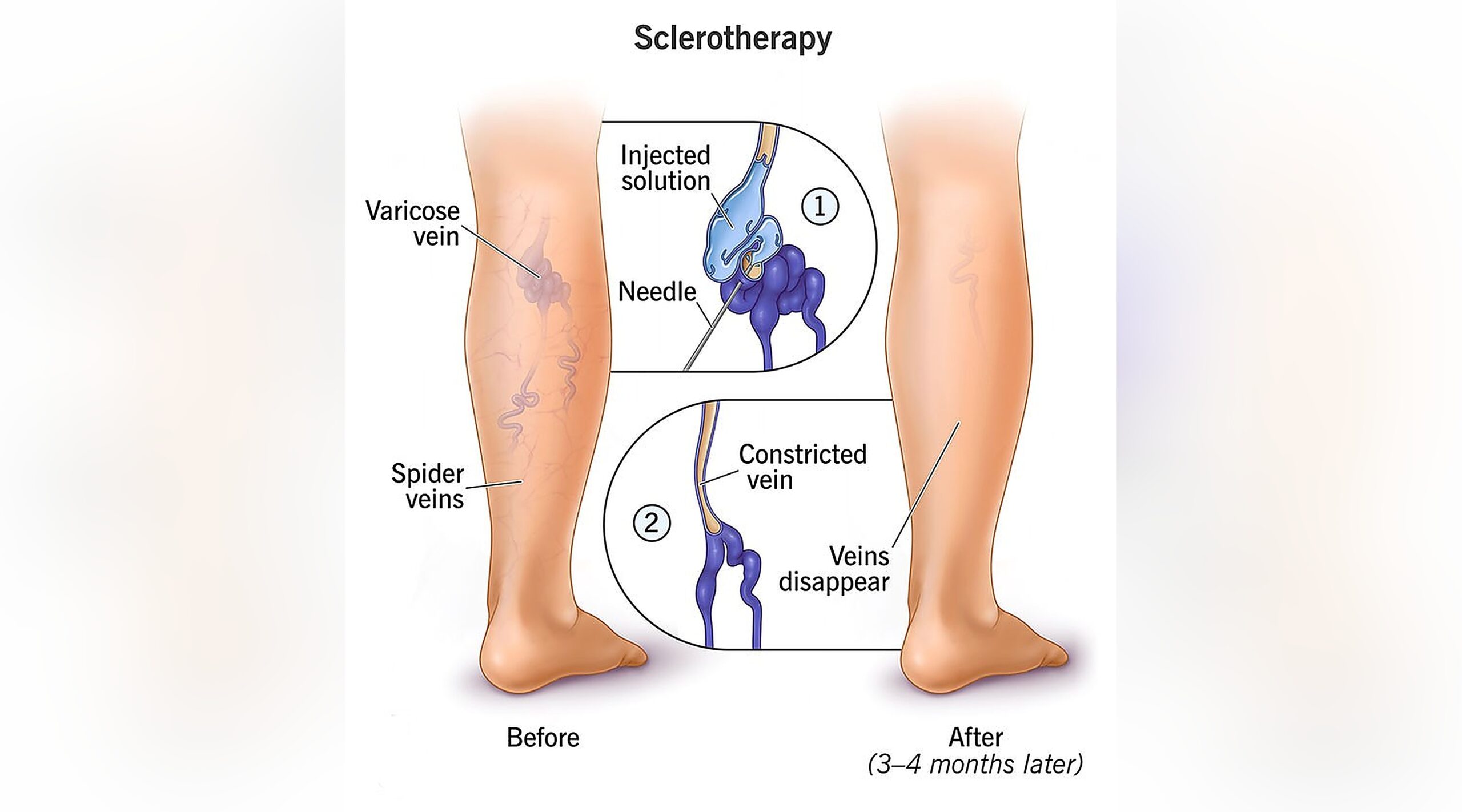
Sclerotherapy is a minimally invasive procedure used to treat varicose veins and spider veins by injecting a specialized solution directly into the affected veins. The solution irritates the vein lining, causing the vein to collapse, seal shut, and gradually be absorbed by the body. Blood is naturally redirected to healthier veins, improving circulation and reducing the appearance of unwanted veins.
Sclerotherapy is one of the most commonly performed treatments for small to medium-sized varicose veins and spider veins and can provide both cosmetic and medical benefits.
Why Sclerotherapy Is Performed
Your healthcare provider may recommend sclerotherapy if you have:
- Spider veins
- Small to medium-sized varicose veins
- Leg aching or discomfort related to vein disease
- Burning or throbbing sensations in the legs
- Leg heaviness or fatigue
- Mild swelling associated with venous insufficiency
- Cosmetic concerns related to visible veins
- Residual veins following other vein treatments
The procedure helps improve both symptoms and the appearance of affected veins.
How the Procedure Works
Before the Procedure
Preparation may include:
- Review of your medical history and medications
- Physical examination of the affected veins
- Duplex ultrasound evaluation if deeper vein disease is suspected
- Discussion of treatment goals and expected results
- Avoiding certain lotions or creams on the day of treatment
Most patients require little preparation before the procedure.
During the Procedure
- The patient lies comfortably on an examination table.
- The treatment area is cleaned.
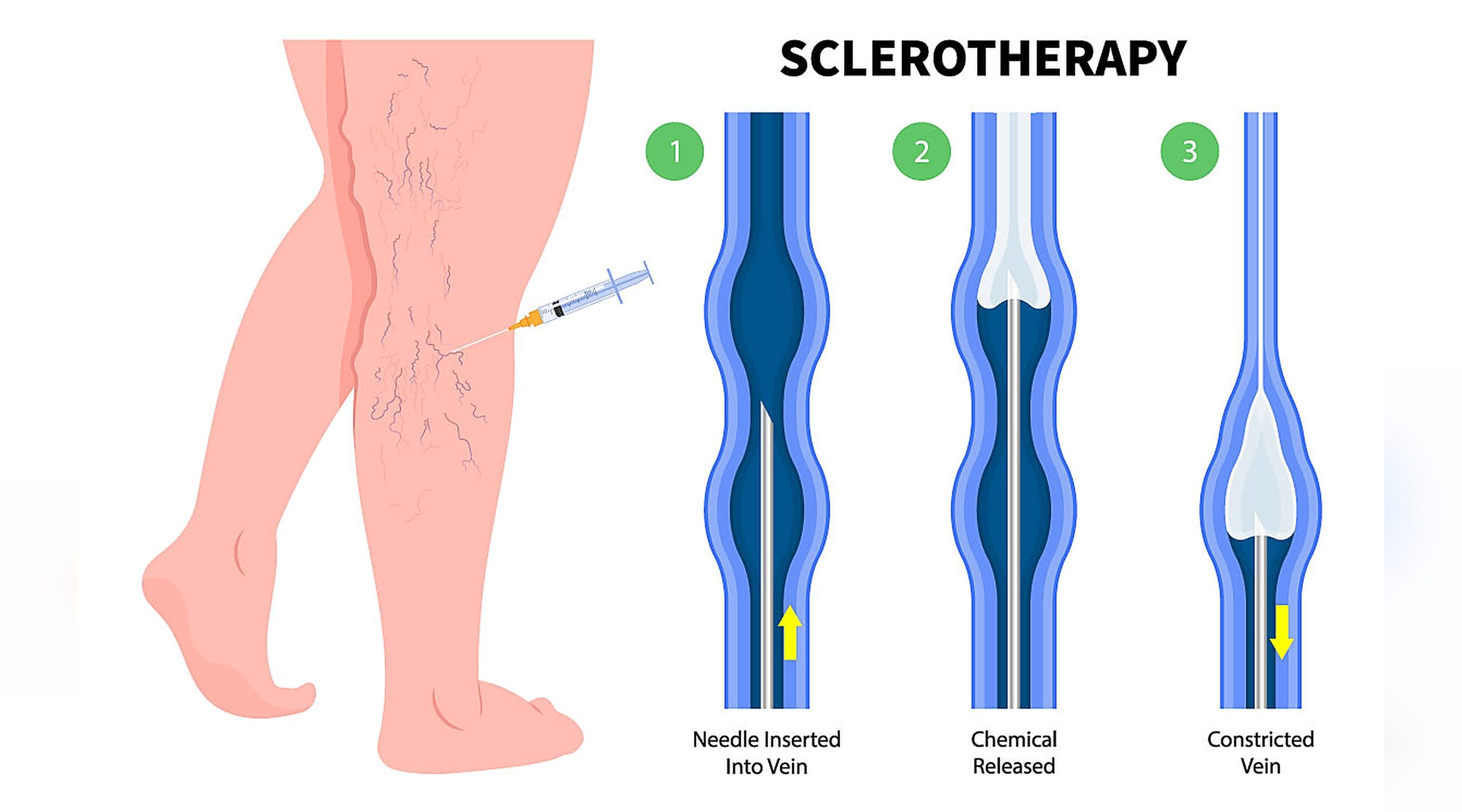
- A very small needle is inserted into the targeted vein.
- A specialized sclerosant solution or foam is injected into the vein.
- The solution causes the vein walls to stick together and close.
- Multiple veins may be treated during the same session.
- Compression may be applied immediately after treatment.
- Compression stockings may be recommended following the procedure.
The procedure typically takes 15 to 45 minutes depending on the number of veins being treated.
Types of Sclerotherapy
Several forms of sclerotherapy may be used, including:
- Liquid Sclerotherapy – commonly used for spider veins and smaller varicose veins
- Foam Sclerotherapy – often used for larger varicose veins and veins beneath the skin surface
- Ultrasound-Guided Sclerotherapy – uses real-time ultrasound imaging to treat deeper veins with greater precision
Your physician will determine the most appropriate treatment approach based on your condition.
What to Expect During the Procedure
- No general anesthesia is required.
- Most patients remain comfortable throughout treatment.
- You may experience a mild stinging or burning sensation during injection.
- Multiple injections may be needed depending on the number of veins being treated.
- Walking is typically encouraged immediately after the procedure.
Most treatments are performed in an outpatient setting.
Benefits of Sclerotherapy
- Minimally invasive treatment
- No surgical incisions
- Effective treatment for spider veins and varicose veins
- Improved appearance of visible veins
- Relief of vein-related symptoms
- Minimal downtime
- Quick outpatient procedure
- Little to no scarring
- High patient satisfaction rates
- Can be repeated if additional treatment is needed
After the Procedure
Following treatment:
- Compression stockings may be recommended for several days or weeks.
- Walking is encouraged to promote healthy circulation.
- Mild bruising, redness, or tenderness may occur at injection sites.
- Most patients return to normal activities immediately.
- Strenuous exercise may be limited temporarily.
- Treated veins gradually fade over several weeks to months.
Your physician will provide individualized recovery instructions.
Risks and Safety
Sclerotherapy is generally very safe, but potential risks include:
- Temporary bruising
- Mild swelling
- Redness or irritation at injection sites
- Skin discoloration along treated veins
- Small areas of skin irritation or ulceration (rare)
- Temporary lumps within treated veins
- Allergic reaction to the sclerosant solution (rare)
- Blood clot formation (uncommon)
- Development of new small blood vessels near the treatment area
Most side effects are mild and resolve over time.
Understanding Your Results
Successful sclerotherapy may result in:
- Reduction or elimination of spider veins
- Improvement in the appearance of varicose veins
- Reduced leg aching and discomfort
- Less heaviness and fatigue in the legs
- Improved confidence and cosmetic appearance
- Better overall venous circulation
Many patients notice gradual improvement over several weeks, with continued fading of treated veins over the following months.
Frequently Asked Questions
Is sclerotherapy painful?
Most patients experience only mild discomfort. The injections are performed with very small needles, and treatment is generally well tolerated.
How many treatments will I need?
The number of sessions varies depending on the size, location, and number of veins being treated. Some patients achieve excellent results after a single session, while others may require multiple treatments.
When will I see results?
Small spider veins may begin fading within a few weeks, while larger veins may take several months to show full improvement.
Can I return to work afterward?
Yes. Most patients return to work and normal daily activities immediately after treatment.
Will the treated veins return?
The treated veins are permanently closed and absorbed by the body. However, new varicose or spider veins can develop over time due to underlying venous disease or genetic factors.
Schedule a Consultation
If you are bothered by spider veins, varicose veins, leg discomfort, or other symptoms of venous disease, sclerotherapy may offer a safe and effective solution. Contact our team today to schedule a consultation and learn whether this minimally invasive vein treatment is right for you.