

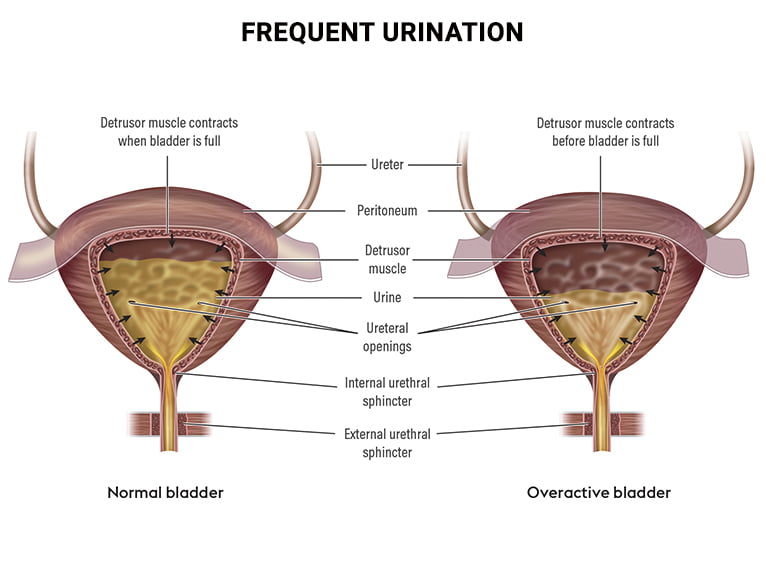
Frequent Urination
Understanding Frequent Urination
Frequent urination is the need to urinate more often than usual throughout the day or night. While occasional changes in urinary habits can occur, persistent frequency may be a sign of an underlying prostate, bladder, or urinary tract condition. Identifying the cause early can help prevent symptoms from interfering with daily activities and sleep.
Common Symptoms and Concerns
Men with frequent urination may feel the need to urinate repeatedly, even when the bladder is not full. Symptoms can include waking up multiple times during the night, sudden urinary urgency, difficulty holding urine, or a sensation of incomplete bladder emptying. These issues can affect work, travel, social activities, and overall quality of life.
Diagnosis and Evaluation
A thorough medical evaluation is important to determine the underlying cause of frequent urination. Assessment may include a review of symptoms, physical examination, urine testing, blood tests, prostate evaluation, ultrasound imaging, and other diagnostic studies when necessary. Understanding the source of the problem helps guide the most effective treatment plan.
Treatment Options for Symptom Relief
Treatment depends on the underlying condition causing the urinary symptoms. Common approaches may include lifestyle modifications, medications, treatment for prostate enlargement, bladder management strategies, or minimally invasive procedures when appropriate. Personalized care focuses on reducing urinary frequency and improving bladder function.
Restoring Comfort and Confidence
Frequent urination is often manageable with the right diagnosis and treatment. Early intervention can help prevent complications, improve sleep quality, and reduce disruptions to daily life. With expert evaluation and individualized care, many patients experience significant symptom relief and a return to normal activities.