
Dialysis Fistula Dysfunction
Understanding Dialysis Fistula Dysfunction
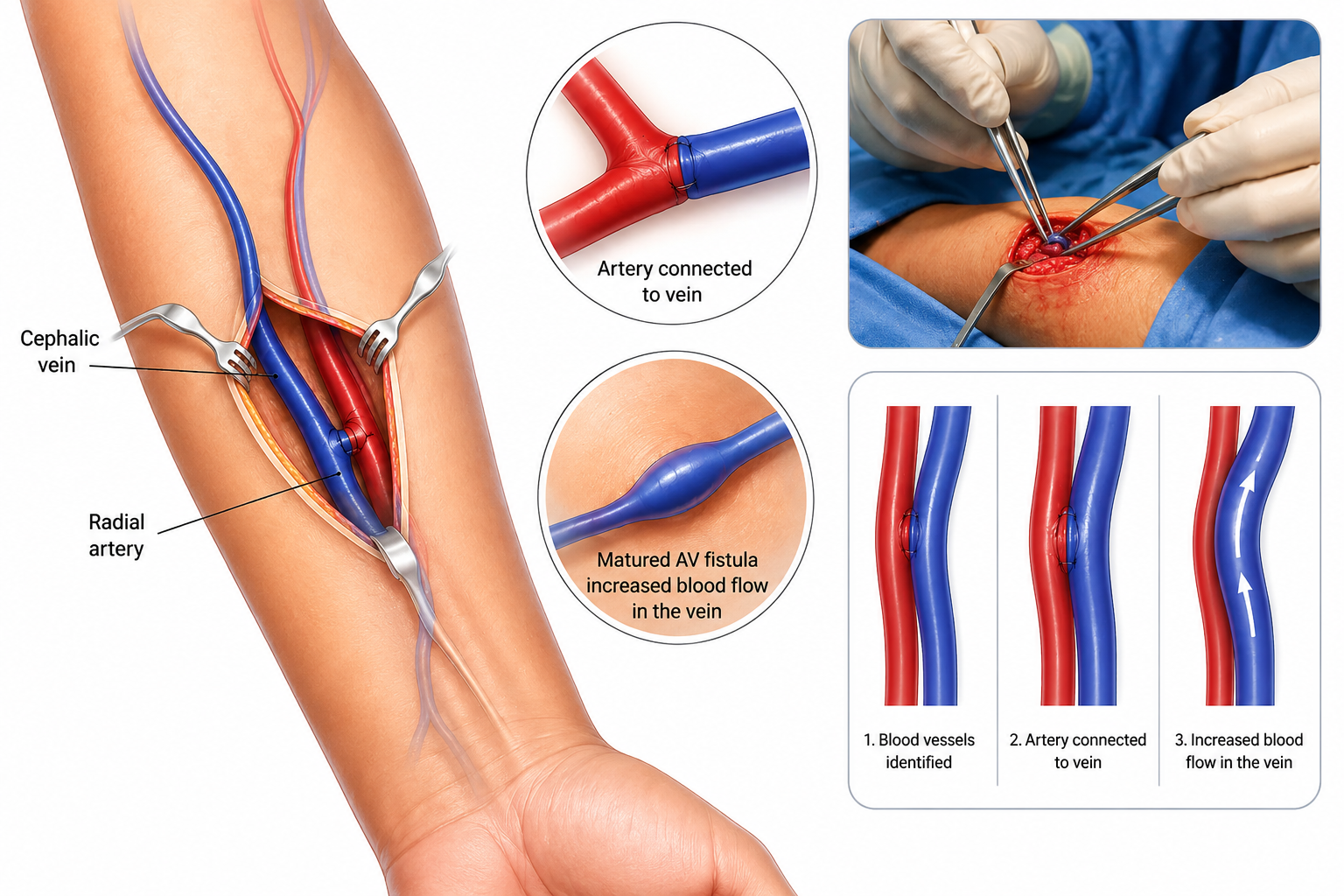
A dialysis fistula is a surgically created connection between an artery and a vein that provides reliable access for hemodialysis treatments. Over time, the fistula may develop narrowing, reduced blood flow, or other issues that affect its performance. Dialysis fistula dysfunction can interfere with effective dialysis and may lead to complications if not treated promptly.
Common Signs and Symptoms
Patients may notice difficulty during dialysis sessions, prolonged bleeding after needle removal, swelling of the arm, pain around the access site, or changes in the vibration (thrill) normally felt over the fistula. Some individuals may also experience reduced dialysis efficiency or repeated problems with needle placement. These symptoms often indicate that the fistula requires medical evaluation.
Diagnosis and Access Evaluation
Early assessment is important to identify the cause of fistula dysfunction and prevent access failure. Evaluation may include a physical examination, vascular ultrasound, fistulogram (access imaging), and other specialized tests to assess blood flow and detect narrowing or blockages. Accurate diagnosis helps guide the most appropriate treatment plan.
Treatment Options for Restoring Function
Treatment focuses on improving blood flow and preserving the dialysis access. Depending on the underlying issue, options may include minimally invasive procedures such as angioplasty to open narrowed areas, thrombectomy to remove clots, or other access-saving interventions. Prompt treatment can often restore fistula function and improve dialysis effectiveness.
Protecting Your Dialysis Access
Regular monitoring and ongoing access care are essential for maintaining a healthy, long-lasting fistula. Reporting changes in blood flow, swelling, or dialysis performance early can help prevent serious complications. With timely intervention and expert vascular access care, many patients can continue dialysis safely and effectively while preserving their access for the future.