
Critical Limb Ischemia (CLI)
Understanding Critical Limb Ischemia
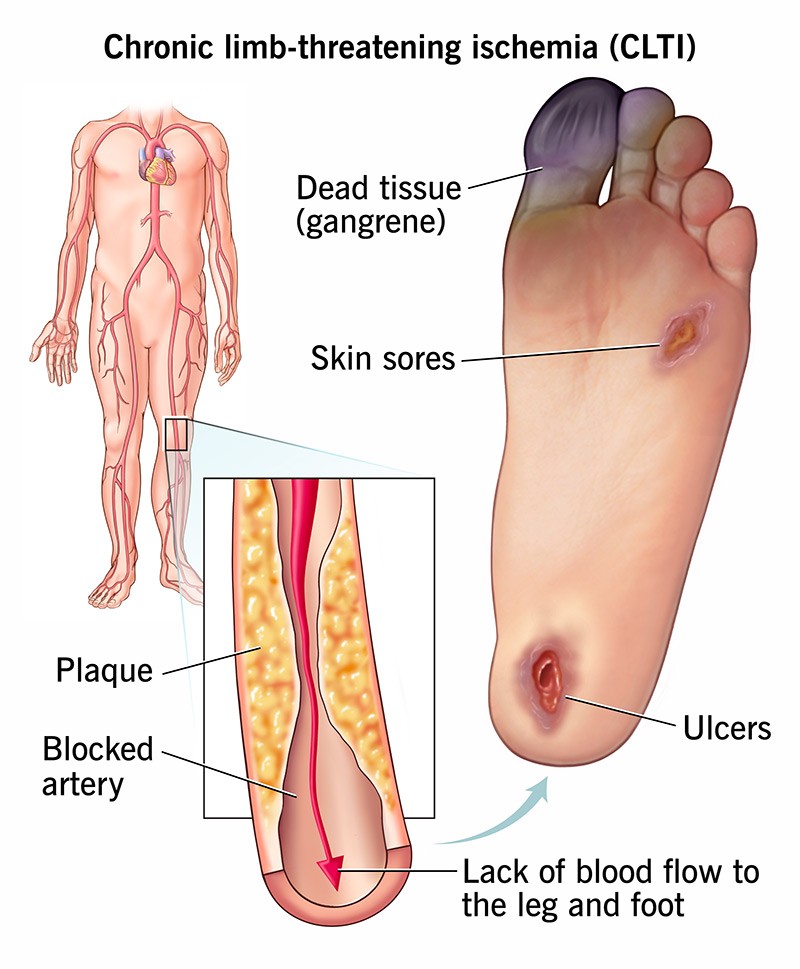
Critical Limb Ischemia (CLI) is an advanced and serious form of peripheral artery disease (PAD) that occurs when blood flow to the legs or feet becomes severely reduced. Without adequate circulation, the tissues do not receive enough oxygen and nutrients to remain healthy. CLI requires prompt medical attention because it can lead to tissue damage, non-healing wounds, infection, and an increased risk of limb loss.
Symptoms and Warning Signs
Patients with CLI may experience severe pain in the feet or toes even while resting, especially at night. Other common signs include non-healing wounds, ulcers, skin discoloration, cold feet, and areas of tissue breakdown or gangrene. These symptoms often indicate a significant reduction in blood flow and should be evaluated as soon as possible.
Diagnosis and Vascular Assessment
Early diagnosis is essential to prevent complications and preserve limb function. Evaluation typically includes a physical examination, vascular ultrasound, ankle-brachial index (ABI), circulation studies, and advanced imaging such as CT angiography or angiography. These tests help identify blocked or narrowed arteries and determine the most effective treatment strategy.
Advanced Treatment Options
The primary goal of treatment is to restore blood flow, relieve pain, promote wound healing, and prevent limb loss. Depending on the severity and location of the blockage, treatment may include medications, minimally invasive endovascular procedures such as angioplasty and stenting, or surgical bypass when necessary. A personalized treatment plan is developed to address each patient’s specific vascular needs.
Protecting Limb Health and Recovery
Ongoing follow-up care is critical for monitoring circulation and supporting long-term recovery. Managing risk factors such as diabetes, smoking, high blood pressure, and high cholesterol can significantly improve outcomes. With timely intervention and expert vascular care, many patients with Critical Limb Ischemia can achieve improved blood flow, enhanced healing, and a better quality of life.