
Kyphoplasty
Kyphoplasty is a minimally invasive, image-guided procedure used to treat painful vertebral compression fractures in the spine. These fractures commonly occur due to osteoporosis, cancer affecting the bones, or traumatic injury. The procedure helps stabilize the fractured vertebra, reduce pain, and in some cases restore lost vertebral height.
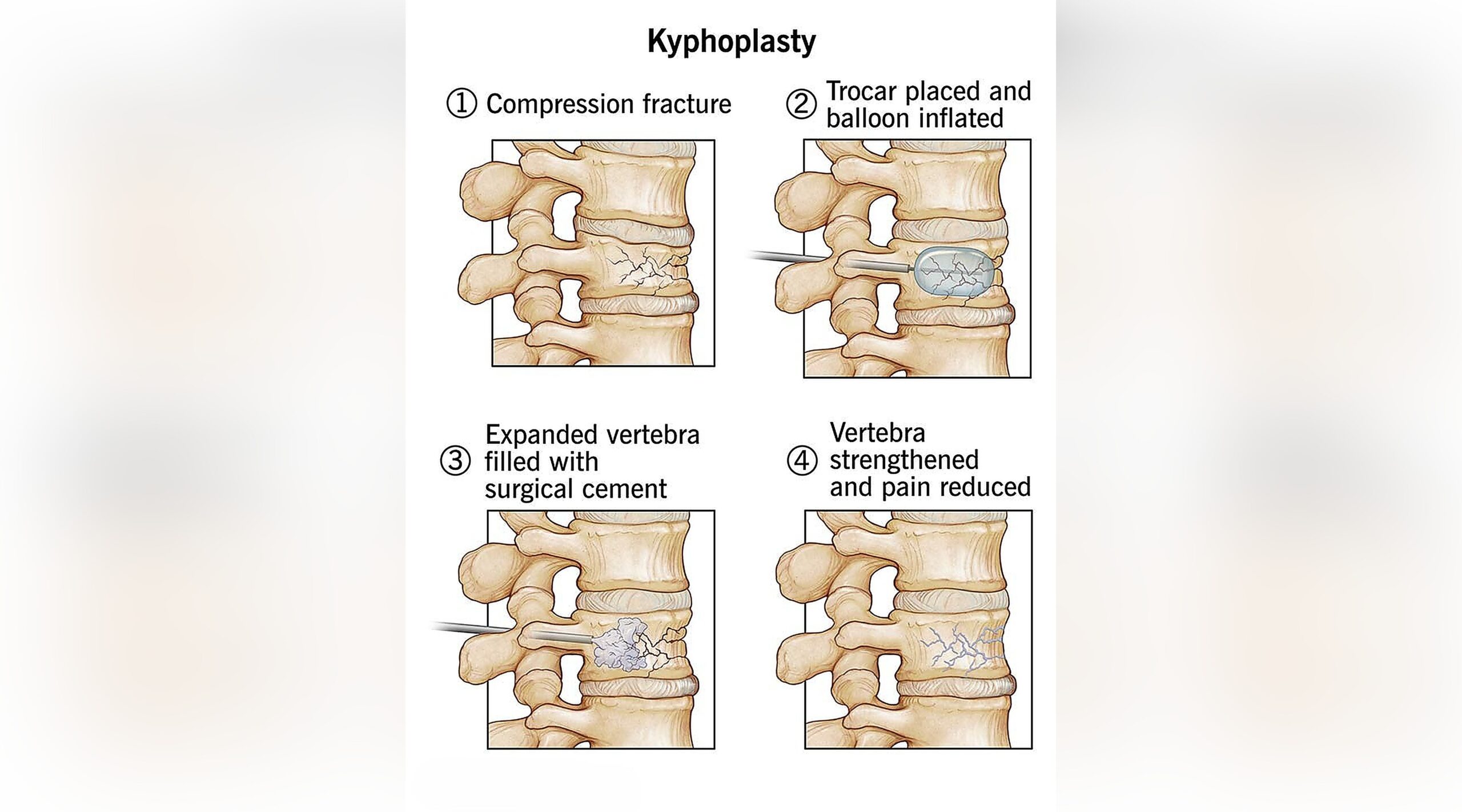
During kyphoplasty, a small balloon is inserted into the fractured vertebra and gently inflated to create space. Medical bone cement is then injected into the vertebra to stabilize the fracture and strengthen the bone.
Why Kyphoplasty Is Performed
Your healthcare provider may recommend kyphoplasty if you have:
- Painful vertebral compression fractures
- Osteoporosis-related spinal fractures
- Fractures causing difficulty with walking or daily activities
- Persistent back pain despite conservative treatment
- Spinal fractures related to cancer or metastatic disease
- Loss of vertebral height due to compression fractures
- Progressive spinal deformity caused by vertebral collapse
The procedure is intended to relieve pain, improve mobility, and stabilize the affected vertebra.
How the Procedure Works
Before the Procedure
Preparation may include:
- Review of your medical history and medications
- Physical examination
- Imaging studies such as X-rays, MRI, CT scan, or bone scans
- Blood tests if needed
- Temporary adjustment of blood-thinning medications if instructed
- Fasting for several hours before the procedure
- Placement of an intravenous (IV) line for medications and fluids
Kyphoplasty is typically performed in a hospital, outpatient surgical center, or interventional radiology suite.
During the Procedure
- The patient lies face down on a specialized procedure table.
- The skin over the treatment area is cleaned and sterilized.
- Local anesthesia, sedation, or general anesthesia may be administered.
- Using X-ray guidance, a small needle is inserted into the fractured vertebra.
- A specialized balloon is advanced into the bone.
- The balloon is carefully inflated to create a cavity and potentially restore some vertebral height.
- The balloon is removed after the cavity is formed.
- Medical-grade bone cement is injected into the space within the vertebra.
- The cement hardens quickly, stabilizing the fracture.
- Final imaging confirms proper cement placement.
The procedure typically takes 30 minutes to 1 hour per treated vertebra.
What to Expect During the Procedure
- You may receive sedation or anesthesia for comfort.
- Most patients experience little or no pain during the procedure.
- Continuous imaging guidance ensures accurate placement of instruments.
- Vital signs are monitored throughout the treatment.
- The procedure is minimally invasive and requires only small skin punctures.
Benefits of Kyphoplasty
- Rapid pain relief for many patients
- Stabilizes fractured vertebrae
- Minimally invasive procedure
- May restore some lost vertebral height
- Improves mobility and daily function
- Reduces the need for prolonged pain medication use
- Short recovery time
- Minimal scarring
- Outpatient treatment for many patients
- Helps improve overall quality of life
After the Procedure
Following kyphoplasty:
- You will be monitored in a recovery area.
- Many patients experience pain relief within hours or days.
- Mild soreness at the treatment site may occur temporarily.
- Most patients return home the same day or after a short observation period.
- Walking and light activities are often encouraged soon after treatment.
- Follow-up appointments may be scheduled to monitor recovery.
Your physician will provide individualized post-procedure instructions.
Risks and Safety
Kyphoplasty is generally considered safe, but potential risks include:
- Bleeding
- Infection
- Temporary soreness at the treatment site
- Cement leakage outside the vertebra
- Nerve irritation or injury
- Allergic reaction to medications or materials used during the procedure
- Fracture of nearby vertebrae in the future
- Rare complications related to anesthesia
Serious complications are uncommon when the procedure is performed by experienced specialists.
Understanding Your Results
Successful kyphoplasty may result in:
- Significant reduction in back pain
- Improved spinal stability
- Better posture and mobility
- Increased ability to perform daily activities
- Reduced reliance on pain medications
- Improved quality of life
- Faster return to normal routines
Many patients report meaningful improvement shortly after treatment, with continued benefits during recovery.
Frequently Asked Questions
What is a vertebral compression fracture?
A vertebral compression fracture occurs when a spinal vertebra collapses or compresses, often due to osteoporosis, cancer, or trauma.
Is kyphoplasty the same as spine surgery?
No. Kyphoplasty is a minimally invasive procedure performed through small punctures rather than large surgical incisions.
How long does the procedure take?
Most kyphoplasty procedures take approximately 30 minutes to 1 hour per vertebra being treated.
When will I feel pain relief?
Many patients experience pain relief within 24 to 48 hours, although some notice improvement sooner.
Can kyphoplasty treat all back pain?
No. Kyphoplasty is specifically designed to treat pain caused by vertebral compression fractures. Your physician will determine whether your symptoms are related to this condition.
Schedule a Consultation
If you are experiencing back pain caused by a vertebral compression fracture, osteoporosis, or a spinal fracture related to cancer or injury, kyphoplasty may help stabilize the affected vertebra and provide lasting pain relief. Contact our team today to schedule a consultation and learn whether this minimally invasive spine procedure is right for you.