
Prostate Artery Embolization (PAE)
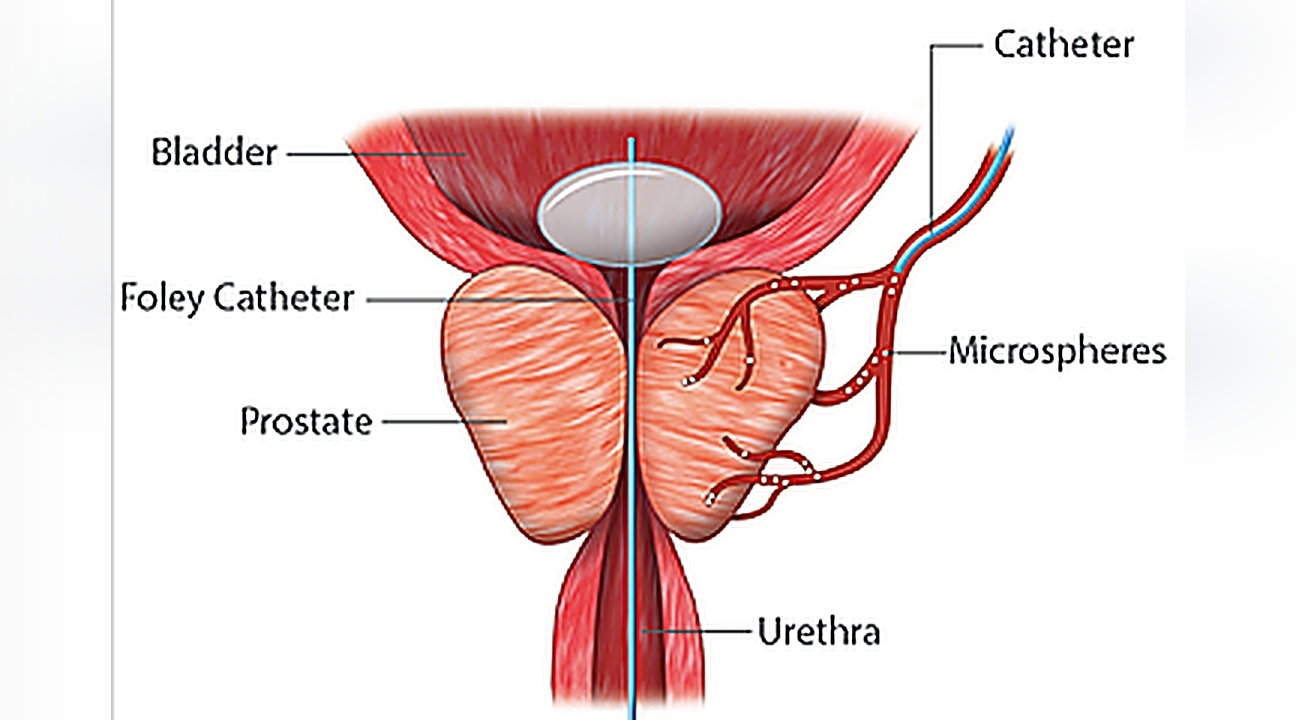
Prostate Artery Embolization (PAE) is a minimally invasive, image-guided procedure used to treat symptoms caused by an enlarged prostate, also known as Benign Prostatic Hyperplasia (BPH). The procedure works by reducing blood flow to the prostate gland, causing it to gradually shrink and relieving pressure on the urethra.
PAE offers an alternative to traditional prostate surgery and can help improve urinary symptoms while preserving normal prostate anatomy.
Why Prostate Artery Embolization Is Performed
Your healthcare provider may recommend PAE if you have:
- Benign Prostatic Hyperplasia (BPH)
- Frequent urination, especially at night
- Difficulty starting urination
- Weak urine stream
- Incomplete bladder emptying
- Urinary urgency
- Urinary retention
- Symptoms that have not improved with medications
- A desire to avoid or delay prostate surgery
- Medical conditions that increase surgical risk
The procedure is intended to improve urinary function and quality of life by reducing prostate size.
How the Procedure Works
Before the Procedure
Preparation may include:
- Review of your medical history and medications
- Physical examination and prostate evaluation
- Blood and urine tests
- Imaging studies such as ultrasound, MRI, or CT angiography
- Discussion of treatment goals and expected outcomes
- Temporary adjustment of certain medications if instructed
- Placement of an intravenous (IV) line for medications and fluids
PAE is typically performed in a hospital or outpatient interventional radiology center.
During the Procedure
- The patient lies comfortably on an examination table.
- The skin is cleaned and sterilized.
- Local anesthesia is administered at the catheter insertion site, usually in the wrist or groin.
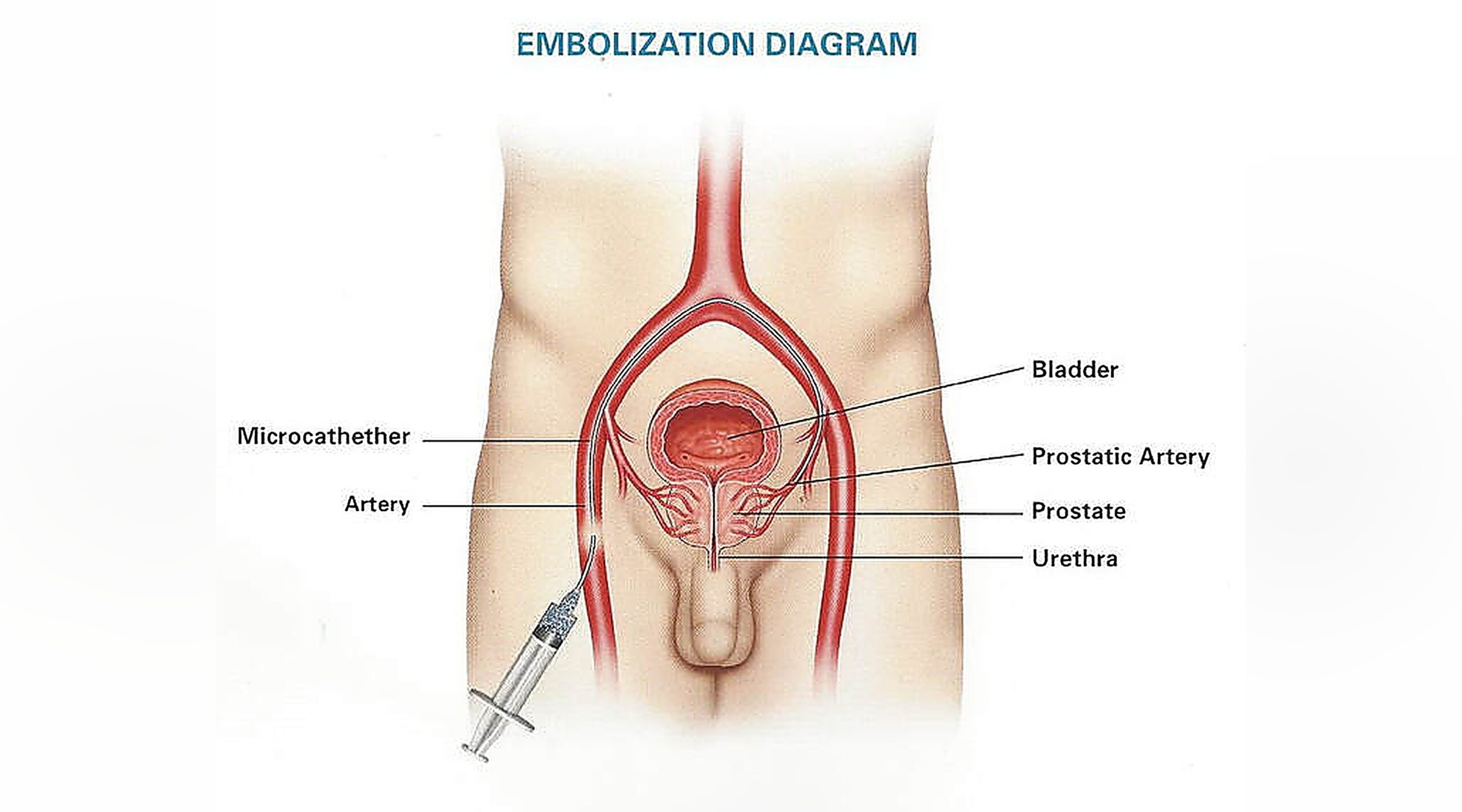
- A small catheter is inserted into an artery.
- Using real-time X-ray guidance, the catheter is advanced to the arteries supplying the prostate gland.
- Contrast dye is injected to identify the prostate arteries.
- Tiny embolic particles are delivered into the prostate arteries.
- Blood flow to the prostate is reduced, causing the gland to gradually shrink over time.
- Both sides of the prostate are typically treated during the same procedure.
- The catheter is removed and the access site is closed.
The procedure usually takes 1 to 3 hours depending on the complexity of the prostate artery anatomy.
What to Expect During the Procedure
- You remain awake throughout the procedure.
- Mild sedation may be provided to help you relax.
- Most patients experience minimal discomfort.
- You may feel a temporary warm sensation when contrast dye is injected.
- Vital signs are monitored continuously.
- The procedure does not require surgical incisions.
Most patients tolerate PAE very well.
Benefits of Prostate Artery Embolization
- Minimally invasive treatment
- No surgical incision in the prostate
- Relief of urinary symptoms caused by BPH
- Reduced urinary frequency and urgency
- Improved urine flow
- Preservation of the prostate gland
- Short recovery time
- Outpatient or same-day procedure for many patients
- Lower risk of certain surgical complications
- Alternative for patients who are not candidates for surgery
After the Procedure
Following PAE:
- You will be monitored in a recovery area for several hours.
- Mild pelvic discomfort, urinary frequency, or burning with urination may occur temporarily.
- Most patients return home the same day or after a short observation period.
- Normal activities can often be resumed within a few days.
- Symptom improvement develops gradually as the prostate shrinks.
- Follow-up appointments are scheduled to monitor progress.
Your physician will provide individualized recovery instructions.
Risks and Safety
Prostate Artery Embolization is generally considered safe, but potential risks include:
- Bruising or bleeding at the catheter insertion site
- Temporary pelvic discomfort
- Increased urinary frequency or urgency
- Burning during urination
- Urinary tract infection
- Blood in the urine, semen, or stool for a short period
- Allergic reaction to contrast dye
- Blood vessel injury
- Temporary urinary retention
- Need for additional treatment if symptoms persist
Serious complications are uncommon when the procedure is performed by experienced specialists.
Understanding Your Results
Successful PAE may result in:
- Improved urine flow
- Reduced urinary frequency
- Less nighttime urination (nocturia)
- Better bladder emptying
- Reduced urinary urgency
- Improved quality of life
- Decreased symptoms related to an enlarged prostate
Many patients begin noticing improvement within several weeks, with continued benefits developing over the following months as the prostate gradually shrinks.
Do you have any Questions?
Schedule a Consultation
If you are experiencing frequent urination, weak urine flow, nighttime urination, or other symptoms of an enlarged prostate, Prostate Artery Embolization may provide effective relief without the need for surgery. Contact our team today to schedule a consultation and learn whether this advanced minimally invasive treatment is right for you.