
Genicular Artery Embolization (GAE)
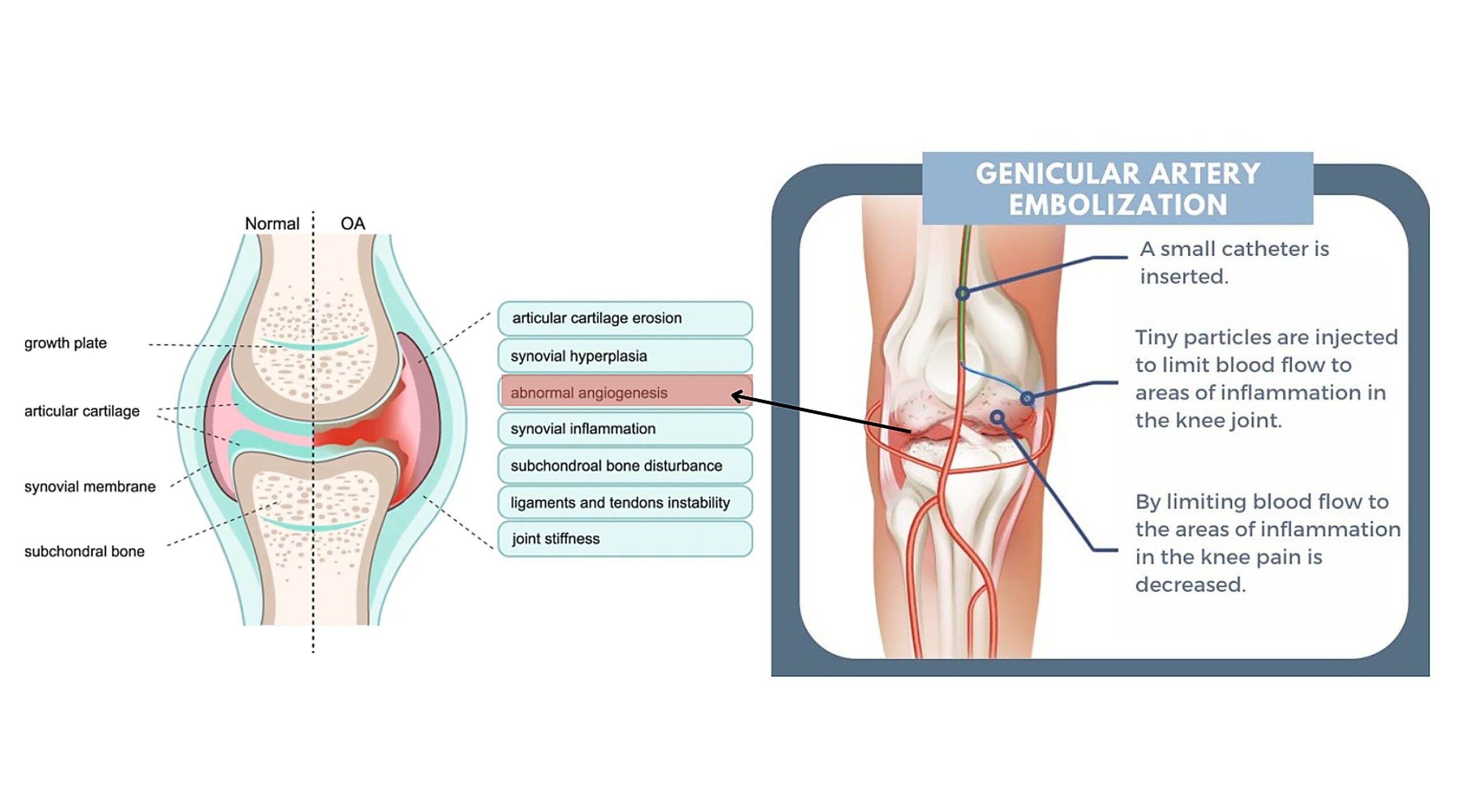
Genicular Artery Embolization (GAE) is a minimally invasive, image-guided procedure used to treat chronic knee pain caused by osteoarthritis. The procedure works by reducing abnormal blood flow and inflammation within the knee joint through the targeted embolization of small arteries known as the genicular arteries.
GAE is designed for patients who continue to experience knee pain despite conservative treatments and may be seeking an alternative to surgery or joint replacement.
Why Genicular Artery Embolization Is Performed
Your healthcare provider may recommend GAE if you have:
- Knee osteoarthritis
- Chronic knee pain that limits daily activities
- Persistent pain despite medications or physical therapy
- Swelling and inflammation within the knee joint
- Difficulty walking or exercising due to knee discomfort
- Limited improvement from injections or other conservative treatments
- A desire to delay or avoid knee replacement surgery
- Medical conditions that make surgery less desirable
The procedure aims to reduce inflammation, relieve pain, and improve knee function.
How the Procedure Works
Before the Procedure
Preparation may include:
- Review of your medical history and medications
- Physical examination of the knee
- Imaging studies such as X-rays or MRI
- Blood tests if needed
- Discussion of treatment goals and expected outcomes
- Placement of an intravenous (IV) line for medications and fluids
The procedure is typically performed in an outpatient interventional radiology suite.
During the Procedure
- The patient lies comfortably on an examination table.
- The skin is cleaned and sterilized.
- Local anesthesia is administered at the catheter insertion site, usually in the groin or wrist.
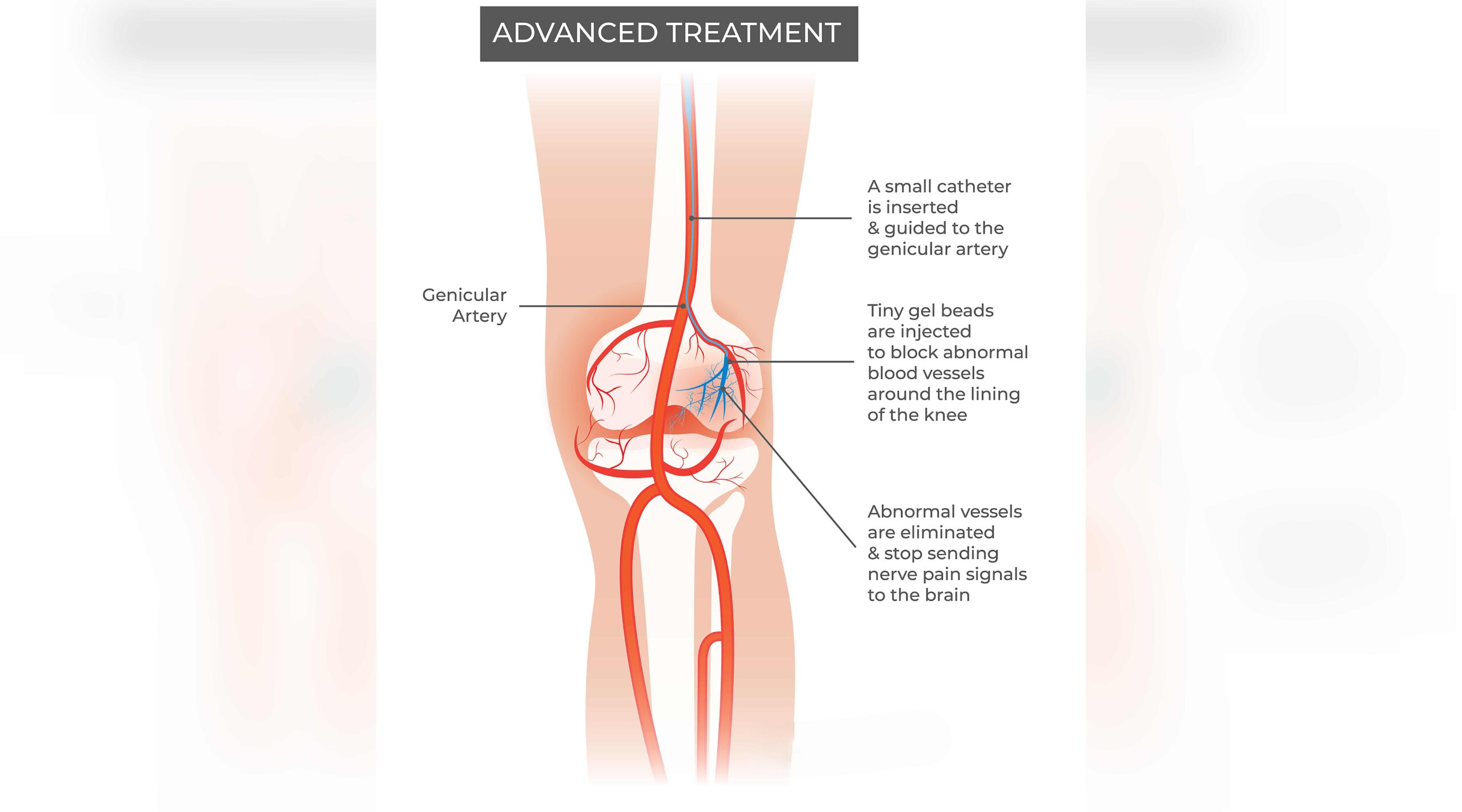
- A small catheter is inserted into an artery.
- Using real-time X-ray imaging, the catheter is guided to the genicular arteries supplying the knee.
- Contrast dye is injected to identify areas of abnormal blood flow associated with inflammation.
- Tiny embolic particles are delivered into selected arteries.
- Blood flow to inflamed tissue is reduced while preserving normal circulation to the knee.
- Final imaging confirms successful treatment.
- The catheter is removed and the access site is closed.
The procedure typically takes 1 to 2 hours.
What to Expect During the Procedure
- You remain awake throughout the procedure.
- Mild sedation may be provided to help you relax.
- Most patients experience little discomfort.
- You may feel a temporary warm sensation when contrast dye is injected.
- Vital signs are monitored continuously throughout treatment.
Most patients tolerate the procedure very well.
Benefits of Genicular Artery Embolization
- Minimally invasive treatment
- No surgical incision in the knee
- Reduced knee pain and inflammation
- Improved mobility and function
- Outpatient procedure
- Short recovery time
- May delay or reduce the need for knee replacement surgery
- Minimal scarring
- Preserves the natural knee joint
- Quick return to daily activities
After the Procedure
Following GAE:
- You will be monitored for a short recovery period.
- Mild soreness at the catheter insertion site may occur.
- Some patients experience temporary knee discomfort as inflammation begins to improve.
- Walking is usually permitted shortly after treatment.
- Most patients return home the same day.
- Improvement often develops gradually over several weeks to months.
Your physician will provide detailed post-procedure instructions and follow-up recommendations.
Risks and Safety
Genicular Artery Embolization is generally considered safe, but potential risks include:
- Bruising or bleeding at the catheter insertion site
- Temporary knee pain or soreness
- Infection
- Allergic reaction to contrast dye
- Blood vessel injury
- Skin discoloration or irritation near the treatment area
- Temporary numbness or sensitivity
- Incomplete symptom relief
- Need for additional treatment in the future
Serious complications are uncommon when performed by experienced specialists.
Understanding Your Results
Successful GAE may result in:
- Reduced knee pain
- Decreased inflammation within the joint
- Improved walking and mobility
- Better participation in daily activities
- Enhanced quality of life
- Reduced reliance on pain medications
- Delayed need for surgical intervention
Many patients notice progressive improvement over the first several weeks following treatment, with benefits continuing to develop over time.
Do you have any Questions?
Schedule a Consultation
If you are struggling with chronic knee pain from osteoarthritis and have not found relief from conservative treatments, Genicular Artery Embolization may be an effective minimally invasive option. Contact our team today to schedule a consultation and learn whether GAE is right for your knee pain management and mobility goals.