
Endovenous Vein Ablation
Endovenous Vein Ablation is a minimally invasive procedure used to treat varicose veins and chronic venous insufficiency by closing damaged or malfunctioning veins in the legs. The procedure uses thermal energy, typically delivered through laser or radiofrequency technology, to seal the affected vein and redirect blood flow to healthier veins.
By eliminating the source of venous reflux, endovenous vein ablation can relieve symptoms, improve circulation, and reduce the appearance of varicose veins without the need for traditional vein-stripping surgery.
Why Endovenous Vein Ablation Is Performed
Your healthcare provider may recommend endovenous vein ablation if you have:
- Varicose veins
- Chronic venous insufficiency
- Leg pain or aching
- Leg heaviness or fatigue
- Swelling in the legs or ankles
- Burning, throbbing, or cramping sensations
- Skin discoloration caused by poor circulation
- Venous ulcers or non-healing wounds
- Symptoms that persist despite compression stockings and conservative treatment
The procedure addresses the underlying cause of venous disease rather than simply treating visible veins.
How the Procedure Works
Before the Procedure
Preparation may include:
- Review of your medical history and medications
- Duplex ultrasound evaluation of the leg veins
- Mapping of the affected veins
- Discussion of treatment options and expected outcomes
- Wearing comfortable clothing on the day of the procedure
In most cases, no fasting or hospital stay is required.
During the Procedure
- The patient lies comfortably on an examination table.
- Ultrasound imaging is used to identify the target vein.
- The skin is cleaned and sterilized.
- Local anesthesia is administered to numb the treatment area.
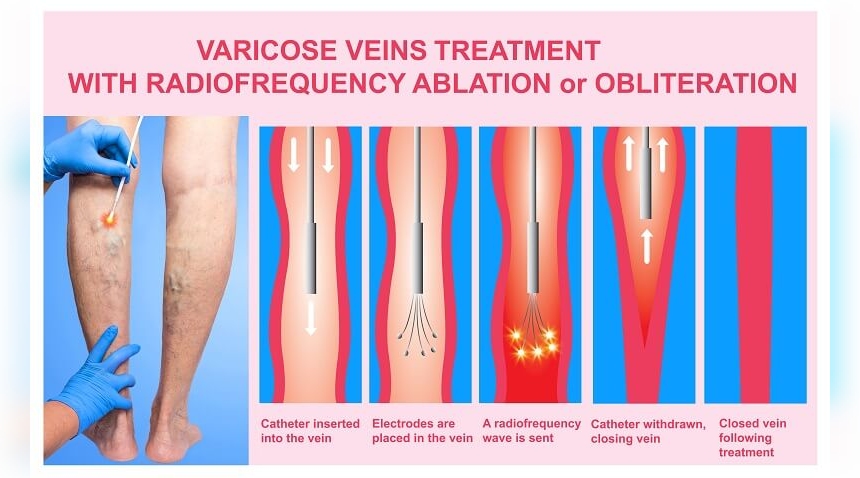
- A small catheter is inserted into the affected vein through a tiny skin puncture.
- A laser fiber or radiofrequency catheter is guided into the vein using ultrasound guidance.
- Thermal energy is delivered to heat the vein wall.
- The treated vein collapses and seals shut.
- Blood flow is naturally redirected to nearby healthy veins.
- The catheter is removed and a small bandage is applied.
The procedure typically takes 30 to 60 minutes per leg.
Types of Endovenous Vein Ablation
Several techniques may be used, including:
- Endovenous Laser Ablation (EVLA) – uses laser energy to close the vein
- Radiofrequency Ablation (RFA) – uses controlled radiofrequency heat to seal the vein
Both methods are highly effective and are commonly used to treat venous insufficiency.
What to Expect During the Procedure
- You remain awake throughout the procedure.
- Local anesthesia helps minimize discomfort.
- Ultrasound guidance allows precise treatment.
- Most patients experience little or no pain.
- Walking is usually encouraged immediately after treatment.
The procedure is performed on an outpatient basis, allowing patients to return home the same day.
Benefits of Endovenous Vein Ablation
- Minimally invasive treatment
- No large surgical incisions
- Effective relief of venous symptoms
- Improved circulation in the legs
- Reduction in varicose veins
- Minimal scarring
- Quick recovery and return to daily activities
- High success rates
- Lower discomfort compared to traditional vein surgery
- Outpatient procedure with minimal downtime
After the Procedure
Following treatment:
- Compression stockings may be recommended for a period of time.
- Walking is encouraged to promote healthy circulation.
- Mild bruising, tenderness, or tightness along the treated vein may occur.
- Most patients return to normal activities within 24 to 48 hours.
- Strenuous exercise may be limited temporarily.
- Follow-up ultrasound examinations may be scheduled to confirm successful vein closure.
Your physician will provide specific post-procedure instructions based on your treatment plan.
Risks and Safety
Endovenous vein ablation is considered very safe, but potential risks include:
- Bruising or soreness at the treatment site
- Temporary swelling
- Skin irritation or discoloration
- Numbness or tingling near the treated vein
- Blood clot formation
- Infection
- Minor burns to surrounding tissue (rare)
- Reopening of the treated vein or development of new varicose veins over time
Serious complications are uncommon.
Understanding Your Results
Successful endovenous vein ablation may result in:
- Relief from leg pain and heaviness
- Reduced swelling
- Improved circulation
- Decreased appearance of varicose veins
- Better healing of venous ulcers
- Improved comfort during standing and walking
- Enhanced quality of life
Results often continue to improve over several weeks and months as the body naturally absorbs the treated vein.
Frequently Asked Questions
Is endovenous vein ablation painful?
Most patients experience minimal discomfort. Local anesthesia helps keep the procedure comfortable, and recovery is generally well tolerated.
How long does the procedure take?
Most treatments take approximately 30 to 60 minutes, depending on the number and size of the veins being treated.
Will the treated vein come back?
The treated vein is permanently sealed. However, new varicose veins can develop over time if underlying venous disease progresses.
When can I return to work?
Many patients return to work and normal daily activities within one to two days.
Will I need compression stockings afterward?
Yes. Compression stockings are often recommended for a period of time to support healing and improve treatment outcomes.
Schedule a Consultation
If you are experiencing varicose veins, leg swelling, aching, heaviness, or symptoms of chronic venous insufficiency, endovenous vein ablation may provide lasting relief with a minimally invasive approach. Contact our team today to schedule a consultation and learn whether this advanced vein treatment is right for you.