
Arterial Embolization
Arterial Embolization is a minimally invasive image-guided procedure used to intentionally block one or more arteries to stop bleeding, reduce blood flow to abnormal tissue, or treat certain vascular conditions. During the procedure, a specialist delivers tiny embolic materials through a catheter to targeted blood vessels, preventing blood flow to a specific area while preserving circulation to surrounding healthy tissues.
Although embolization is commonly used throughout the body, it may be performed in the lower extremities when treating vascular malformations, abnormal bleeding, traumatic injuries, tumors, or other circulatory conditions affecting the legs.
Why Arterial Embolization Is Performed
Your healthcare provider may recommend arterial embolization to:
- Control active bleeding
- Treat vascular malformations or abnormal blood vessels
- Manage bleeding caused by trauma or injury
- Reduce blood flow to certain tumors
- Treat aneurysms or pseudoaneurysms
- Address complications following surgery or procedures
- Manage chronic bleeding that has not responded to other treatments
- Reduce symptoms caused by abnormal vascular conditions
The procedure can often eliminate the need for more invasive surgical treatment.
How the Procedure Works
Before the Procedure
Preparation may include:
- Reviewing your medical history and medications
- Blood tests to evaluate clotting and kidney function
- Imaging studies such as ultrasound, CT scan, or angiography
- Temporary adjustment of blood-thinning medications if instructed
- Fasting for several hours before the procedure
- Placement of an intravenous (IV) line for medications and fluids
The procedure is typically performed in a hospital or specialized interventional radiology suite.
During the Procedure
- The patient lies comfortably on an examination table.
- The skin is cleaned and sterilized.
- Local anesthesia is administered at the catheter insertion site, usually in the groin or arm.
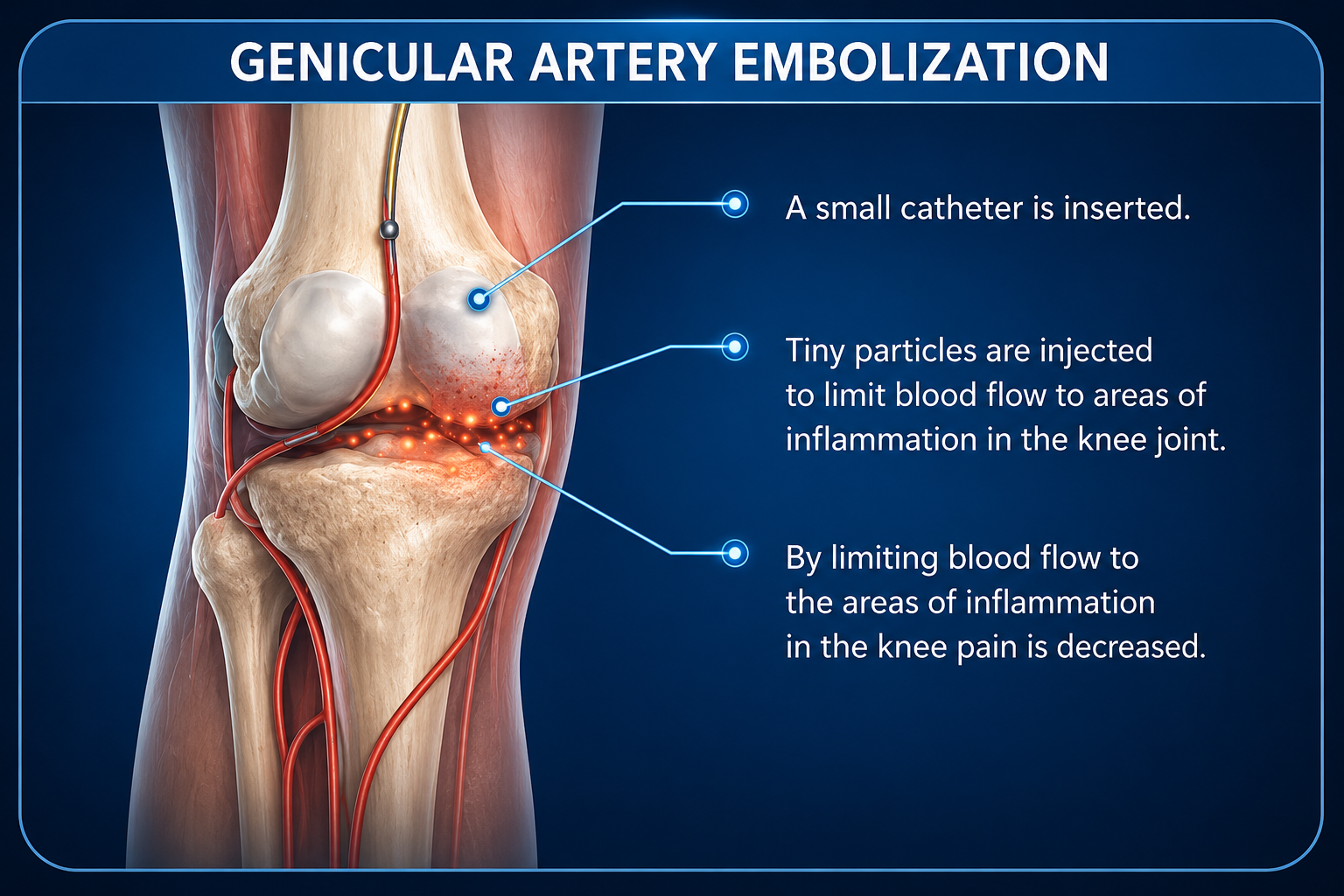
- A small catheter is inserted into an artery.
- Using real-time X-ray imaging, the catheter is guided to the target blood vessel.
- Contrast dye is injected to map blood flow and identify the treatment area.
- Tiny embolic materials are delivered through the catheter to block the selected artery.
- Blood flow to the targeted area is reduced or stopped.
- Final imaging confirms successful treatment.
- The catheter is removed and the access site is closed.
The procedure typically takes between 30 minutes and several hours depending on the complexity of the condition being treated.
Types of Embolic Materials
Several embolic agents may be used, including:
- Tiny particles
- Medical-grade coils
- Gel foam materials
- Liquid embolic agents
- Specialized vascular plugs
The choice depends on the condition being treated and the desired treatment outcome.
What to Expect During the Procedure
- You may receive sedation to help you relax.
- Most patients remain awake but comfortable.
- Mild pressure may be felt at the catheter insertion site.
- A temporary warm sensation may occur when contrast dye is injected.
- Vital signs are continuously monitored throughout the procedure.
- Most patients experience little discomfort during treatment.
Benefits of Arterial Embolization
- Minimally invasive treatment
- No large surgical incision
- Effective control of bleeding
- Precise targeting of abnormal blood vessels
- Shorter recovery time compared to surgery
- Reduced blood loss
- Lower risk of complications than many open surgical procedures
- Can often be performed on an outpatient basis
- Preserves surrounding healthy tissue
After the Procedure
Following embolization:
- You will be monitored in a recovery area for several hours.
- Mild soreness or bruising at the catheter site may occur.
- Some patients experience temporary discomfort related to reduced blood flow in the treated area.
- Pain medication may be prescribed if needed.
- Most patients return home the same day or after a short hospital stay.
- Follow-up imaging may be scheduled to assess treatment success.
Your physician will provide specific recovery instructions based on your condition.
Risks and Safety
Arterial embolization is generally considered safe, but potential risks include:
- Bleeding at the catheter insertion site
- Bruising or swelling
- Infection
- Allergic reaction to contrast dye
- Blood vessel injury
- Unintended blockage of nearby blood vessels
- Temporary pain or inflammation after treatment
- Kidney complications related to contrast dye
- Rare need for additional procedures
Your healthcare team uses advanced imaging and careful planning to minimize these risks.
Understanding Your Results
Successful arterial embolization may result in:
- Immediate or gradual control of bleeding
- Reduced blood flow to abnormal vessels or tissue
- Relief of symptoms
- Improved healing and recovery
- Reduced need for surgery
- Stabilization of vascular abnormalities
Follow-up appointments and imaging studies help evaluate treatment effectiveness and determine whether additional treatment is needed.
Frequently Asked Questions
Is arterial embolization painful?
Most patients experience minimal discomfort during the procedure. Sedation, local anesthesia, and pain management techniques help ensure comfort.
Will I be awake during the procedure?
Yes. Most patients remain awake with moderate sedation, although deeper sedation may be used in some cases.
How long does recovery take?
Many patients resume normal activities within a few days, although recovery varies depending on the condition being treated.
Is embolization permanent?
In many cases, the blockage created by embolization is intended to be permanent. The specific outcome depends on the embolic material used and the treatment goal.
Will I need additional treatment afterward?
Some patients require follow-up imaging or additional procedures, while others achieve successful treatment with a single embolization session.
Schedule a Consultation
If you have abnormal bleeding, a vascular malformation, a circulatory condition, or another condition that may benefit from minimally invasive vascular treatment, arterial embolization may be an effective option. Contact our team today to schedule a consultation and learn whether this advanced image-guided procedure is right for you.