
Ultrasound-Guided Thyroid Biopsy
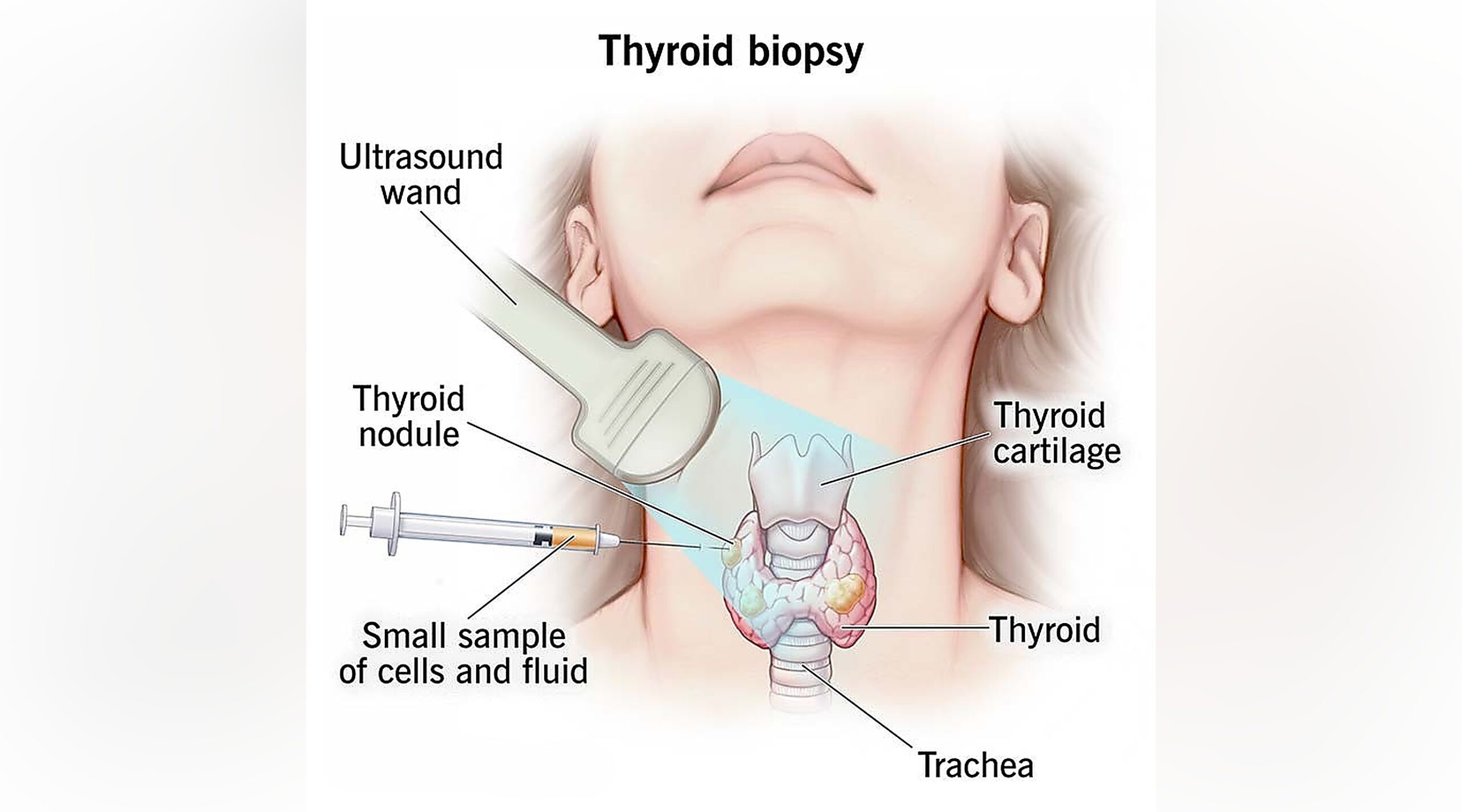
An ultrasound-guided thyroid biopsy is a minimally invasive procedure used to evaluate thyroid nodules or abnormal areas within the thyroid gland. Using real-time ultrasound imaging, a specialist precisely guides a thin needle into the targeted nodule to collect small tissue or cell samples for laboratory analysis.
This procedure helps determine whether a thyroid nodule is benign, suspicious, or cancerous.
Why Is a Thyroid Biopsy Performed?
Your doctor may recommend an ultrasound-guided thyroid biopsy if:
- A thyroid nodule is found during a physical exam
- An ultrasound shows suspicious features
- A thyroid nodule is increasing in size
- You have symptoms such as difficulty swallowing or hoarseness
- There is a family history of thyroid cancer
- Additional evaluation is needed after abnormal thyroid imaging
Most thyroid nodules are noncancerous, but biopsy provides important diagnostic information to guide treatment decisions.
How the Procedure Works
Before the Procedure:
Preparation is typically minimal. Patients may be asked to:
- Avoid certain blood-thinning medications if instructed by their physician
- Wear comfortable clothing
- Continue normal eating and drinking unless otherwise directed
The procedure is usually performed in an outpatient setting and takes approximately 20–30 minutes.
During the Procedure:
- The patient lies comfortably on an examination table with the neck slightly extended.
- Ultrasound gel is applied to the neck area.
- A high-frequency ultrasound probe identifies the thyroid nodule in real time.
- The skin may be cleaned and numbed with local anesthetic.
- A thin needle is carefully guided into the nodule using ultrasound imaging.
- Several small samples may be collected to ensure accurate analysis.
- The samples are sent to a pathology laboratory for evaluation.
Most patients experience only mild pressure or minimal discomfort.
Benefits of Ultrasound Guidance
Using ultrasound guidance provides several advantages:
- Increased accuracy in targeting thyroid nodules
- Improved sample quality
- Minimally invasive approach
- No surgical incision
- Reduced risk of complications
- Faster recovery and minimal downtime
Ultrasound guidance is especially useful for small, deep, or difficult-to-palpate nodules.
After the Procedure
Patients can typically return to normal activities immediately after the biopsy.
You may experience:
- Mild tenderness at the biopsy site
- Slight bruising or swelling
- Minor discomfort for 1–2 days
Applying a cold compress may help relieve soreness.
Risks and Safety
An ultrasound-guided thyroid biopsy is considered very safe. Complications are uncommon but may include:
- Minor bleeding
- Bruising
- Temporary discomfort
- Rare infection
Serious complications are extremely rare.
Understanding Your Results
Biopsy results are usually available within several days. Results may indicate:
- Benign (noncancerous) nodule
- Suspicious or indeterminate findings
- Malignant (cancerous) cells
- Need for additional testing or repeat biopsy
Your physician will review the findings and discuss the most appropriate next steps.
Frequently Asked Questions
Is a thyroid biopsy painful?
Most patients report minimal discomfort. The needle used is very small, and local anesthetic may be used if needed.
How long does the procedure take?
The biopsy itself usually takes about 20–30 minutes.
Will I need someone to drive me home?
Most patients can drive themselves home and resume normal activities immediately.
When will I receive my results?
Results are commonly available within 3–7 business days.
Schedule a Consultation
If you have a thyroid nodule or need further evaluation, our team provides safe, accurate ultrasound-guided thyroid biopsy procedures using advanced imaging technology and patient-centered care. Contact us today to schedule an appointment or learn more about your treatment options.