
Phlebectomy
Phlebectomy, also known as Ambulatory Phlebectomy or Microphlebectomy, is a minimally invasive procedure used to remove varicose veins through tiny skin incisions. The procedure is designed to eliminate bulging, visible veins that cause discomfort, swelling, or cosmetic concerns while improving overall circulation in the legs.
Phlebectomy is often performed in combination with other vein treatments, such as endovenous ablation or Varithena®, to address both the underlying vein disease and the visible varicose veins.
Why Phlebectomy Is Performed
Your healthcare provider may recommend phlebectomy if you have:
- Large, bulging varicose veins
- Leg aching or discomfort caused by varicose veins
- Leg heaviness or fatigue
- Swelling in the legs or ankles
- Burning, throbbing, or cramping sensations
- Skin irritation associated with vein disease
- Cosmetic concerns related to visible varicose veins
- Persistent symptoms despite compression stockings or conservative treatment
The procedure removes problematic veins while preserving healthy circulation through other veins.
How the Procedure Works
Before the Procedure
Preparation may include:
- Review of your medical history and medications
- Venous ultrasound mapping to identify affected veins
- Discussion of treatment goals and expected outcomes
- Marking the target veins while standing
- Wearing loose, comfortable clothing on the day of the procedure
Most patients do not require fasting or hospital admission.
During the Procedure
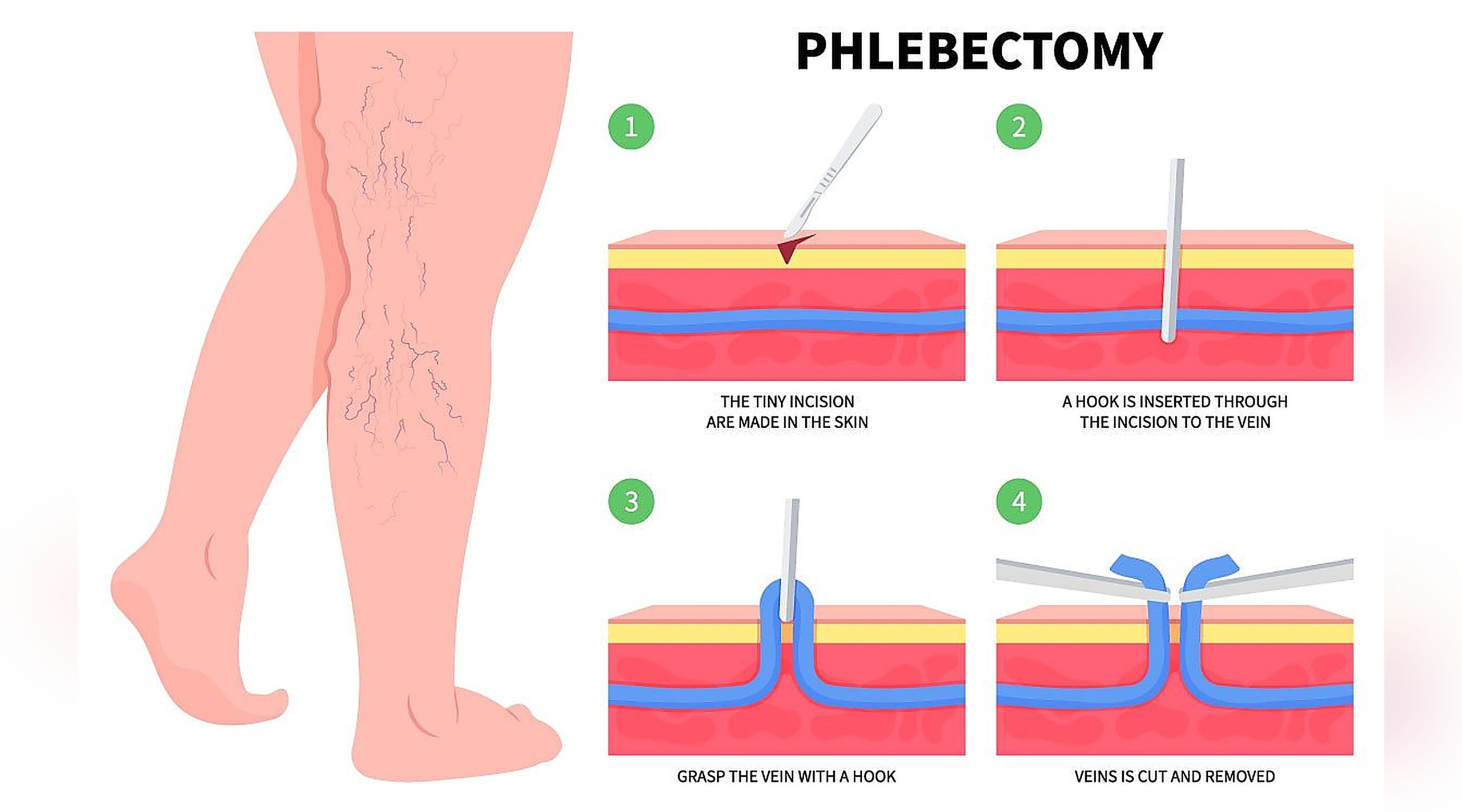
- The patient lies comfortably on an examination table.
- The treatment area is cleaned and sterilized.
- Local anesthesia is administered along the affected vein.
- Tiny skin openings are made using specialized instruments.
- Small sections of the varicose vein are gently removed through the openings.
- Multiple veins may be treated during the same session.
- The small openings usually do not require stitches.
- Compression bandages or stockings are applied after treatment.
The procedure typically takes 30 to 90 minutes depending on the number and size of the veins being treated.
What to Expect During the Procedure
- You remain awake throughout the procedure.
- Local anesthesia helps keep the treatment area comfortable.
- Most patients experience little discomfort.
- No large incisions are required.
- The procedure is performed on an outpatient basis.
Most patients are able to return home shortly after treatment.
Benefits of Phlebectomy
- Removes visible varicose veins
- Minimally invasive procedure
- No large surgical incisions
- Minimal scarring
- Effective symptom relief
- Improved appearance of the legs
- Quick recovery time
- Outpatient treatment
- High success rates
- Can be combined with other vein therapies
After the Procedure
Following treatment:
- Compression stockings may be recommended for several days or weeks.
- Walking is encouraged to support healthy circulation.
- Mild bruising, swelling, or tenderness may occur.
- Small skin openings typically heal quickly.
- Most patients return to normal activities within a day or two.
- Strenuous exercise may be temporarily restricted.
Your physician will provide personalized recovery instructions and follow-up recommendations.
Risks and Safety
Phlebectomy is generally very safe, but potential risks include:
- Bruising
- Mild swelling
- Temporary discomfort or tenderness
- Minor bleeding from treatment sites
- Infection
- Temporary numbness or tingling near treated areas
- Skin discoloration
- Small scars at incision sites
- Development of new varicose veins over time
Serious complications are uncommon.
Understanding Your Results
Successful phlebectomy may result in:
- Removal of bulging varicose veins
- Reduced leg pain and discomfort
- Less swelling and heaviness
- Improved circulation
- Better appearance of the legs
- Increased comfort during daily activities
- Enhanced confidence and quality of life
Results are often visible immediately, with continued improvement as bruising and swelling resolve over the following weeks.
Frequently Asked Questions
Is phlebectomy painful?
Most patients experience minimal discomfort because local anesthesia is used throughout the procedure.
Will I have scars afterward?
The procedure uses very small skin openings, which typically heal with little or no noticeable scarring.
How long does the procedure take?
Most treatments take approximately 30 to 90 minutes, depending on the number of veins being removed.
When can I return to normal activities?
Many patients return to normal daily activities within 24 to 48 hours, although strenuous exercise may be limited temporarily.
Can varicose veins return after treatment?
The treated veins are permanently removed. However, new varicose veins may develop in other areas over time due to underlying venous disease or genetic factors.
Schedule a Consultation
If you are experiencing painful, bulging varicose veins or are concerned about the appearance of visible leg veins, phlebectomy may provide lasting relief with a minimally invasive approach. Contact our team today to schedule a consultation and learn whether this effective vein treatment is right for you.